Singapore’s housing market is set for big changes by 2025. Marcus Chu, CEO of ERA Singapore, notes a link between US presidential elections and Singapore’s property market. The market is looking up, with more homes sold and a better economic mood.
Interest rates might drop, and new projects are coming. This is good news for the housing market in Singapore.
The government aims to finish nearly 100,000 homes by 2025. Almost 40,000 homes will be ready in 2023. This move is to ease the rental market and fix delays from the pandemic.
With growth in the Singapore Property, Singapore Real Estate, and Property Investment Singapore markets, the future looks bright. Singapore’s housing market is on the upswing.
Key Takeaways
- Singapore’s housing market shows positive momentum, with resale transaction volumes surging and new home sales rising steadily.
- The government plans to complete close to 100,000 private and public homes between 2023 and 2025 to address the backlog and alleviate rental market pressure.
- Economic sentiment is improving, interest rates are expected to be cut further, and several new projects are set to launch.
- Singapore’s homeownership rate remains high, with public housing comprising about 72% of the residential properties in the country.
- The future of Singapore’s housing market looks promising, with continued growth expected in the Singapore Property, Singapore Real Estate, and Property Investment Singapore sectors.
Overview of Singapore’s Housing Market
Singapore’s private housing market has seen a big jump in prices and sales lately. This trend often matches US presidential election cycles. New property launches, like 8@BT and Meyer Blue, show strong demand. They sold out quickly, with prices from $2,067 to $3,260 per square foot.
Government policies, such as the ABSD and TDSR, have changed the market a lot. Global events, like US elections, also affect how people buy property in Singapore.
The government is working to solve the housing shortage. They plan to finish nearly 100,000 homes by 2025. This will help meet the growing demand for housing, which is key for the market.
The Singapore real estate market is split into three main areas: CCR, RCR, and OCR. Each area has its own prices and features. This gives buyers and investors many choices.
Projected Demand for Housing in 2025
The demand for housing in Singapore is expected to stay strong until 2025. With 89.7% of people owning homes in 2023, it’s clear many want to own property. The population is growing, and more people are moving to cities, which also boosts demand.
People’s preferences for housing are changing. More HDB flat owners want to move to private condos. Remote work is also changing what people look for in a home, possibly leading to more space and homes outside city centers.
Property prices in Singapore are set to go up by 3% in 2025. But, Australia and Hong Kong might see even bigger jumps of 7-8% and up to 10%, respectively.
Yet, most residents, about 77.8%, still live in public housing or HDB flats. The average price of an HDB flat is $597,297, with an average price per square foot of $582.04. In contrast, condos average $1,945,523, with a square foot price of $1,880.78.
The Role of Technology in Housing Development
Technology is changing Singapore’s housing scene, making it more innovative and efficient. Singapore Property Developers are using the latest tech to shape the future of homes. They aim to make housing better for everyone in the city-state.
Smart homes are becoming common, with features like voice control and energy-saving systems. Eco-friendly tech, like solar panels and smart water meters, is also being used. These changes make living better and help Singapore become more sustainable.
Virtual reality (VR) and augmented reality (AR) are changing how people buy homes. Now, buyers can explore properties online. This lets them see homes before they buy, making decisions easier.
New building methods, like prefabricated parts and robots, are making construction faster and better. The government wants to start more than 150 new projects by 2025. This push for new tech is helping to make building homes more efficient.
Technology is making homes in Singapore better, thanks to developers and the government working together. They’re adding smart features, green tech, and new building ways. This makes Singapore a leader in property investment.
Affordable Housing Initiatives
Singapore is dedicated to making homes affordable for its people. The Housing and Development Board (HDB) leads the way. The Build-To-Order (BTO) scheme is a favorite for first-time buyers. In 2023, HDB aims to launch about 20,000 flats in 22 projects.
The government is serious about keeping homes affordable. It offers subsidies and policies to help. First-time buyers get grants like the Additional CPF Housing Grant. This helps low-income families buy their first home.
Now, over 80% of Singaporeans live in public housing. And 90% of them own their homes. The HDB is looking into new housing models and updating old estates. It’s also introducing Community Care Apartments for seniors and helping rental families become homeowners.
As Singapore’s property and housing market grow, affordable housing is key. The government balances supply, subsidies, and new housing ideas. This ensures home ownership is possible for everyone in Singapore.
Luxury Property Market Insights
The luxury property market in Singapore is drawing in both local and foreign investors. High-end condos, especially in prime spots, are in high demand. Meyer Blue, a freehold luxury project on Meyer Road, has seen strong sales, with prices averaging $3,260 per square foot.
Foreign investment in Singapore real estate is still significant, even with a 60% additional buyer’s stamp duty for foreign buyers.
Luxury developments are popping up in the central region and established residential areas. Luxury home sales in Singapore hit a new high, with a 25% increase in the Core Central Region in the second quarter of 2021. Landed housing segment transactions almost tripled in the first seven months of 2021, showing the appeal of Singapore luxury real estate.
The Singapore property investment market is expected to keep growing. The luxury residential segment is forecasted to grow at a compound annual growth rate (CAGR) of over 3% from 2024 to 2029. Domestic buyers, who made up 75.7% of luxury condo purchases in the first half of 2021, are expected to keep driving demand for high-end properties.
Green Building Practices in Singapore
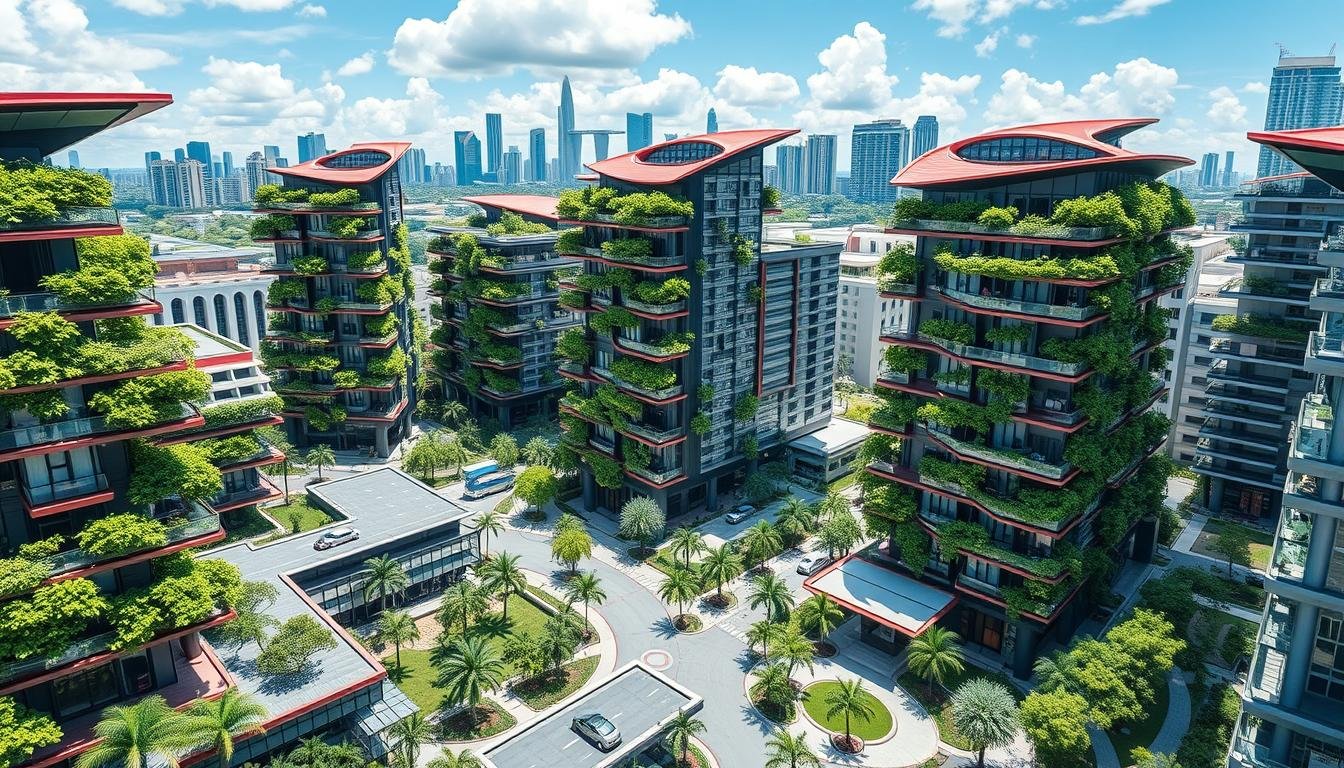
Singapore leads in green building in Asia. The government keeps setting higher targets for energy-efficient buildings. New buildings now use solar panels, collect rainwater, and have energy-saving appliances.
These green homes save money and improve life for those living there. They also help the environment.
The city wants 80% of its buildings to be green by 2030. This is to cut down on energy use, which is over 20% of emissions. The Green Strategy 2030 includes more green spaces and cleaner vehicles.
Buildings in Singapore use designs that help them stay cool naturally. They also have plants on walls and roofs to fight the heat island effect.

Places like the Oasia Hotel Downtown and the ArtScience Museum are great examples. They have lots of green space and use sustainable materials. The Jewel Changi Airport and Kampung Admiralty also got top marks for being green.
These projects show Singapore’s dedication to green buildings. They make the city a better place for everyone.
Community Living and Urban Planning
Singapore focuses on building communities with easy access to amenities and green spaces. This is seen in projects like the redevelopment of the Old Police Academy site. These projects need careful planning, taking 5-10 years or more to prepare and develop.
The Concept Plan was introduced in 1971 and reviewed every 10 years. The Master Plan has been updated six times since 1958. It guides Singapore’s physical development, reviewed every five years to meet changing needs. The 2019 Master Plan aimed to create sustainable and green neighborhoods.
The Urban Redevelopment Authority (URA) oversees the Concept and Master Plans. They hold public forums to get feedback from everyone. This ensures Singapore’s Singapore Property Investment and Singapore Urban Planning meet the needs of all residents, including those in public housing.
The government wants 80% of homes to be within a 10-minute walk of a park or MRT by 2030. Singapore’s public housing is recognized worldwide for its design and sustainability. It serves as a model for other countries.
Impact of COVID-19 on Housing Trends
The COVID-19 pandemic has greatly affected Singapore’s property market. It has caused both short-term and long-term changes in housing trends. The Singapore Property Market saw a drop in rental volumes. This was due to fewer foreigners returning and new arrivals for work.
However, government measures have helped mitigate the COVID-19 Impact on Real Estate in Singapore. These include financial relief and extended loan repayment options. Developers also faced challenges, leading some to ask for project completion date extensions.
The pandemic has changed what buyers want. Now, they prefer larger homes and ones with dedicated work areas. Low-interest rates have also made property investment more appealing. This has led to a recent increase in “recovery buying” as investors see real estate as a safe choice.
Despite initial challenges, the Singapore property market is showing resilience. Transaction volumes are rising, and prices are steady. The government’s efforts to stabilize the market and balance supply and demand are expected to support growth. This makes Singapore an attractive place for property investments in the future.
Property Financing Trends in 2025
The property financing scene in Singapore is changing. It now offers more digital and flexible choices for homebuyers and investors. Looking ahead to 2025, the mortgage market is getting more competitive. Banks and financial institutions are offering a wide range of loan packages to meet different needs.
Digital banking is making the property loan application and approval process easier. This is good news for those interested in Singapore Property Investment and Singapore Mortgage Options. First-time buyers can also expect continued government support. This includes housing schemes and subsidies to help make homeownership more affordable.
Floating-rate home loans are becoming more popular. Homebuyers want flexibility and the chance to save money with expected interest rate cuts. The luxury property segment in the Core Central Region is also attracting foreign investment. This is due to competitive prices and strategic amenities.

As the real estate market grows, property financing options in 2025 will likely become more diverse and digital. They will also be more tailored to the needs of different homebuyers and investors. Whether you’re a first-time buyer or an experienced investor, it’s important to stay updated on the latest trends and options. This will help you make informed decisions in the years to come.
Conclusion: The Future Landscape of Singapore Housing
The future of Singapore’s housing market in 2025 looks promising. It will see more homes, new tech, and a big push for green living and community spirit. The government is working hard to meet the changing needs of Singaporeans. This will lead to a big change in the property scene, making homes more affordable and better to live in.
The Singapore property market is strong and steady. It’s helped by a solid economy and smart government plans. New rules for BTO flats and special help for first-time buyers aim to keep homes affordable. Also, higher taxes for foreign buyers will help keep the market balanced.
Singapore is getting ready for a tech revolution in housing. We’ll see smart homes and better city planning thanks to data. There’s also a big focus on green buildings and community projects. Despite some challenges, the future looks bright. It’s expected to be a time of steady growth and better living for everyone in Singapore.