As we look towards 2025, property investors in Singapore are on the hunt for areas with growth, low prices, and good returns. The city-state’s property market is known for its strength and growth chances. This makes it a great spot for investors from around the world. We’ll dive into the top affordable areas in Singapore for investing in 2025. We’ll look at market trends, economic signs, and how much value properties might gain.
Key Takeaways
- Singapore’s property market is set to keep growing, thanks to stable government policies, GDP growth, and foreign investment.
- Areas like Bukit Timah, Bishan, and Woodlands are great for investing. They offer strong rental income and the chance for property value to rise.
- The East Coast, Jurong East, and Punggol are becoming hot spots for investors. They benefit from better transport links, new infrastructure, and smart city projects.
- Things like public transport, government rules, and the rise of mixed-use buildings are changing the investment scene in Singapore.
- Investors should aim for a mix of leasehold and freehold properties. This helps to get the best returns and spread out risks.
Overview of the Singapore Property Market in 2025
The Singapore property market in 2025 is changing fast. It’s all about sustainable development and mixed-use properties. Prices are also affected by the economy, like GDP growth and inflation.
The government’s rules and foreign investment policies are key. Almost 90% of people own homes here. Prices for resale HDB flats vary from SGD 400,000 to SGD 800,000. Private condos in prime areas can rent for SGD 4,000 to SGD 7,000 monthly, with a 3.2% annual yield.
The market is set to grow by about 4.5% in 2025. But, the vacancy rate might drop to 5%. This shows the market is getting tighter. Commercial real estate is also seeing more demand, with a 6% rise in office space needs.
Key Factors to Consider When Investing
Investing in Singapore’s property market involves several key factors. Location and accessibility are crucial, with properties near MRT stations and major expressways being more valuable. Amenities like shopping malls, schools, and healthcare facilities also play a big role in property desirability.
Community development and urban renewal projects can increase property values in new areas. Investors should look at historical price trends and upcoming projects to gauge potential growth. With a high homeownership rate and young people interested in real estate, demand is strong.
Investors in Singapore need to consider financial regulations too. These include loan-to-value limits, total debt servicing ratio, downpayment requirements, and stamp duties. These rules help keep the market stable but can affect an investor’s plans and budget.
Singapore’s small land area and growing population offer both challenges and opportunities. By carefully evaluating these factors, investors can make smart choices and benefit from the country’s dynamic real estate market.
Affordable Neighborhoods to Watch in 2025
The Singapore property market is changing, and some areas are becoming more affordable. Places like Punggol, Sengkang, and Woodlands are getting better and cheaper. They are now more appealing than areas like Orchard or Marina Bay.
Things like new MRT lines, commercial projects, and government plans help spot these up-and-coming spots. It’s important for investors to compare these areas with older ones. This helps them make smart choices.
The Jurong Lake District in the West is set to become Singapore’s second business hub. It will attract tech professionals, increasing demand for homes and offices. Tengah and Punggol Digital District are also expected to draw tech workers, boosting property values.
Suburbs like Sengkang, Punggol, and Bishan are becoming more popular. They offer affordable condos, bigger homes, and easy access to parks and amenities. These areas are great for those looking for smart homes and sustainable living in Singapore.
The Role of Public Transportation in Property Value
Singapore’s public transportation network is key to its property market. The MRT system is growing, with new lines like Thomson-East Coast and Cross Island. Properties near MRT stations are more expensive because they’re close to work and shopping areas.
The government keeps investing in public transport. This affects property values and where people want to invest. Areas with good transport links have higher property prices because they’re more convenient.
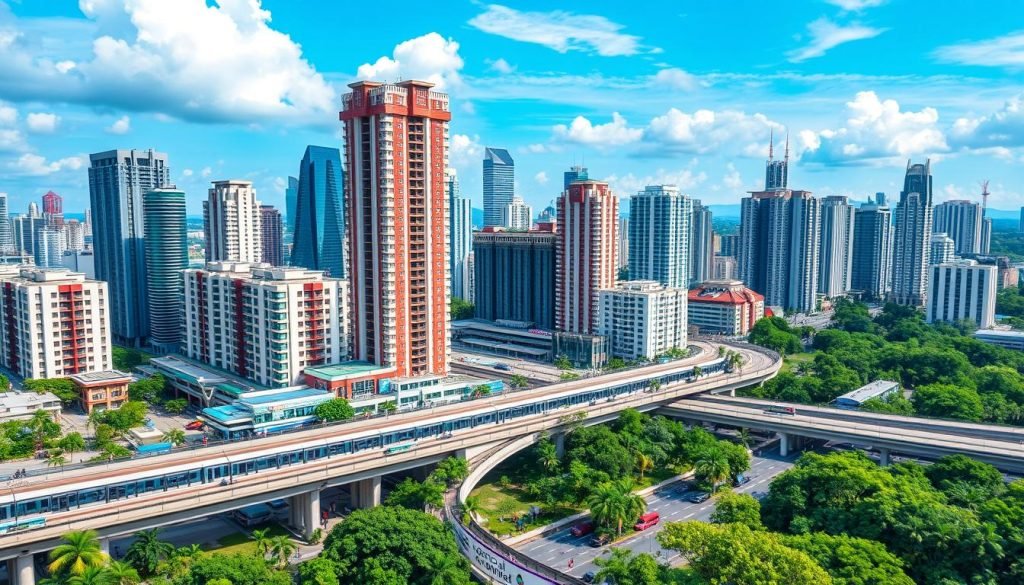
Transport hubs like MRT stations make an area lively. They attract more people, which can increase property values. New amenities and infrastructure also play a big role. They add value and convenience to nearby properties.
The growth of Singapore’s public transport and the government’s efforts to improve it are important. They will keep shaping the property market. This offers both chances and challenges for investors and homebuyers.
Government Policies Impacting Real Estate
Singapore’s real estate market is shaped by government policies. These policies help keep the market stable and prevent too much speculation. The government uses tools like the Additional Buyer’s Stamp Duty (ABSD) and the Total Debt Servicing Ratio (TDSR) framework.
In April 2023, the government made these policies stricter. They raised the ABSD rate for foreign buyers to 60%. They also introduced progressive property tax rates. These taxes are higher on investment properties and luxury homes.
The government also offers help to first-time buyers. They have the Enhanced CPF Housing Grant and Proximity Housing Grant. These programs make buying a home in Singapore easier for locals.
Investors need to keep up with policy changes in Singapore. Knowing how government actions affect the market is key. This knowledge helps investors make smart choices in the Singapore Property market.
The Appeal of Private Residential Developments
Singapore’s real estate market offers great investment chances in private homes, especially condos. These homes have fewer rules on who can own them and rent them out. This makes them attractive to both local and foreign investors.
Condos often have better facilities and are in top locations. This means they can get higher rents. There are different types of condos to invest in, like new ones or ones already sold. It’s important to think about the location, who built it, and if it could be sold as a whole.
Recent data shows condos in Singapore are doing well. For example, a two-bedroom condo at Pasir Ris 8 sold for $1.49 million in November 2023. This was a 37% jump from its launch price in 2021. Bartley Vue also saw a 4.9% rise in median unit price for similar-sized condos.
The charm of condos is also boosted by Singapore’s trend of mixed-use projects. From 2018 to 2023, 33% of government land sales were for these projects. In the first five months of 2024, three out of five sites were for mixed-use. These projects tend to have higher launch rates and prices than just residential ones.
As the Singapore property market keeps changing, condos are still a top choice for investors. Looking at market trends, location, and who built it can help investors make smart choices in this fast-paced market.
Understanding Leasehold vs. Freehold Properties
Investing in Singapore’s real estate market requires knowing the difference between leasehold and freehold properties. Freehold properties mean you own the land forever, which can increase their value and give you more freedom to change them. Leasehold properties, with 99-year or 999-year leases, might be cheaper but have their own challenges like lease decay and the risk of en bloc sales.
Freehold properties are rare and pricey in Singapore. Yet, leasehold properties are more common and often found in top locations, making them a budget-friendly option for many investors. However, as lease terms get shorter, leasehold values can drop, while freehold properties tend to hold their value.
Choosing between leasehold and freehold depends on your investment goals, budget, and future plans. Freehold properties can be a lasting investment, passed down through generations, offering stability and potentially higher returns. Leasehold properties, however, offer flexibility and access to prime spots, but you need to think about legal issues and resale value.
Deciding between Singapore Property and Real Estate investments should be based on a deep understanding of the market, your financial goals, and the legal aspects of each property type. By considering the pros and cons of leasehold and freehold properties, you can make a choice that fits your investment strategy and long-term goals.
Insights on Rental Yields in Various Districts
Understanding rental yields is key in Singapore property investment. Yields change a lot in different districts. This is because of location, property type, and local amenities.
Districts near universities or business hubs often have high yields. This is because of the demand for rentals there.
Proximity to MRT stations, employment centers, and amenities affects rental demand. Expatriates and foreign students also play a role in certain areas. Investors look at historical data and trends to find good investment spots.
The Central Region, like Tanglin/Holland/Bukit Timah and Orchard/River Valley, has high yields. This is because of its prestigious addresses and amenities. The Rest of Central Region (RCR), or City Fringe, also offers chances. Areas like Alexandra/Commonwealth and East Coast/Marine Parade attract young professionals and families.
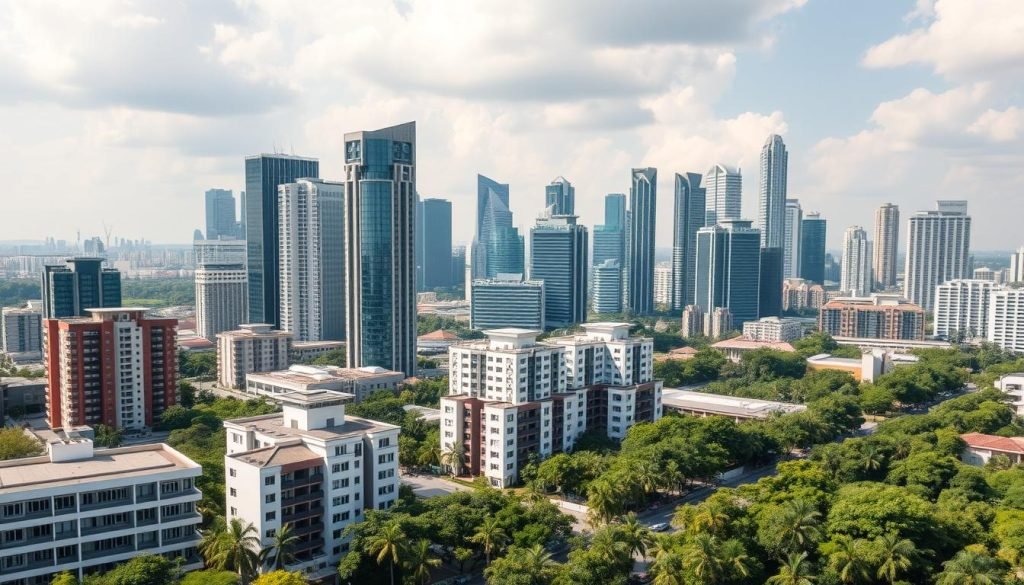
Among Singapore’s 28 districts, District 6 had the highest median rental at $6.96 per square foot. District 26 had the lowest at $2.16 per square foot. District 22 had the highest rental yield at 3.68%, showing the variety in Singapore’s property trends.
The Impact of Foreign Investment in Singapore
Singapore’s property market draws in foreign investors, especially from China, Indonesia, and Malaysia. They are keen on Singapore real estate. But, foreign buyers face extra rules and costs, like higher stamp duties and limits on certain property types.
The Residential Property Act controls foreign ownership of homes in Singapore. In 2023, the ABSD for foreigners went up from 30% to 60%. This change aims to curb foreign speculation and keep property prices stable. Still, Singapore’s political stability, strong currency, and growth potential make it a top choice for foreign investors.
Investors need to stay updated on the latest rules and get expert advice on owning foreign property in Singapore. The government keeps an eye on the market and might change policies again. This could include adjusting ABSD rates, LTV limits, or introducing new rules to balance the market.
Foreign investment still has a big role in Singapore’s property market. International buyers have made up a significant part of private property sales in recent years. Although there was a drop in sales after the ABSD increase, Singapore’s reputation as a stable and prosperous market keeps attracting investors worldwide.
Exploring Mixed-Use Developments
Singapore’s real estate is changing fast. Mixed-use developments are becoming more popular. They mix homes, shops, and sometimes factories in one place. This makes living easy and fun.
These projects use land well and help the environment. They also build communities where people can meet and connect.
Integrated developments are especially liked. They connect directly to MRT stations. This makes it easy to get around and enjoy local shops and food.
These places also focus on being green. They use eco-friendly designs and add green spaces. This makes living there better for the planet.
Living in these areas is great because it’s convenient and saves money. People can save on travel and parking. Plus, there’s a lively community feel.
But, there are some downsides. Noise and privacy issues can be problems. These need to be fixed for a better living experience.
As Singapore grows, mixed-use developments will be key. They offer great living, easy access, and a sense of community. This makes them very appealing to investors and homebuyers.
Sustainability Trends in Singapore Real Estate
Sustainability is key in Singapore’s real estate, thanks to the government’s focus on green buildings. The Building and Construction Authority’s (BCA) Green Mark Scheme encourages developers to use eco-friendly features. By 2023, over 4,600 projects met these green standards.
The built environment sector uses 60% of Singapore’s energy, making sustainability crucial. The goal is to have 80% of buildings certified green by 2030. This push is leading to more sustainable materials, energy-efficient systems, and green spaces in buildings.
Investors in Singapore’s real estate are now looking at the long-term benefits of sustainable properties. These benefits include lower energy costs and higher resale values. The green financing market has also grown, supporting eco-friendly development.
The real estate industry is set to play a big role in Singapore’s sustainability goals. With a growing demand for green buildings and ambitious targets, sustainable real estate is becoming more appealing. It’s expected to be a key investment area in the future.
Conclusion: Making Informed Choices in Singapore Property
The Singapore property market in 2025 is full of chances for smart investors. You can find affordable areas or luxury homes. To succeed, you need to do your homework, understand trends, and know the rules.
Think about where the property is, what it is, and how much money it can make. Keep up with government plans, economic news, and city growth. This info helps you make smart choices.
Use online tools, talk to real estate agents, and check government sites like the URA and HDB. They have lots of useful info. Also, getting advice from experts can help you make the right moves in the market.