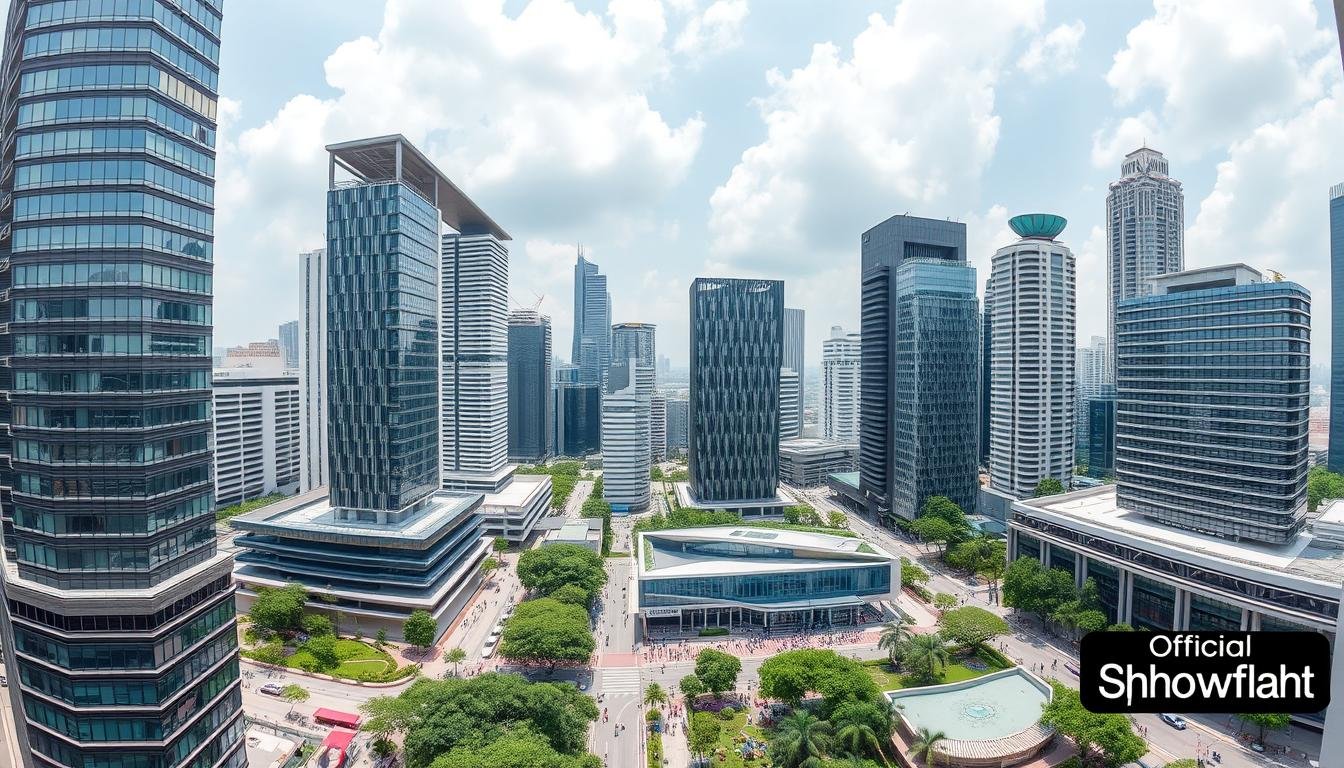
Singapore’s commercial property market has bounced back well after the pandemic. Core CBD office rents have gone up by 14.9% over 12 quarters since Q1 2021. But, recent data shows a possible slowdown. The office rental index in the Central Region dropped by 0.5% in the last quarter. Also, the median rents of Category 1 office spaces in the city center fell by 0.8% in Q3 2024.
The market is facing some challenges. The vacancy rate jumped to 7.8% after the IOI Central Boulevard Towers project added 1.2 million square feet of office space. There’s also a lack of big demand drivers, especially from the technology, media, and telecom (TMT) sector since late 2022.
Despite these challenges, Singapore still has a lot to offer. Its strong infrastructure, political stability, and business-friendly environment attract global investors and companies. This makes Singapore a top choice for commercial real estate investments.
Key Takeaways
- Singapore’s commercial property market has shown resilience, with Core CBD office rents rising 14.9% since 2021.
- However, recent data indicates a slowdown, with a 0.5% decline in the office rental index and a 0.8% drop in median rents for prime office spaces.
- Challenges include a spike in vacancy rates due to new office space additions and lack of large demand drivers.
- Singapore’s strategic advantages and emerging fields like AI present opportunities for future growth in the commercial property sector.
- Overall, the commercial property market in Singapore remains an attractive investment destination despite the current headwinds.
Overview of Singapore’s Commercial Property Market
Singapore’s commercial property market is going through changes. The office sector has seen a slowdown in demand. The five-year average annual net demand has dropped to 0.31 million square feet from 2019 to 2023. This is down from the 10-year average of 0.72 million square feet.
The industrial property sector, however, is showing strength. Total annual transactions in this sector have doubled over the last decade. This shows resilience in the face of challenges.
Major players in the market include big property developers and real estate investment trusts (REITs). In Q1 2024, there was a 7.7% year-on-year decline in leasing volume for factories and warehouses. This is the lowest since 2020. Yet, the electronics manufacturing sector is a bright spot, with growth potential in chip manufacturing facilities.
The retail sector is looking up, with rental growth expected in prime areas like Orchard Road in 2024. Despite a 2% drop in overall retail sales in 2023, food and alcohol sales jumped by 12.2%. The retail industry is shifting focus to experiential strategies to boost growth.
The commercial real estate sector in Singapore is cautiously optimistic for 2024. There’s expected growth in investment deal volumes and a more positive economic outlook. Yet, challenges remain, like rising construction material costs, insurance hikes, and stricter ESG regulations.
Economic Factors Influencing the Market
Singapore is a key player in global finance and trade. It’s the 12th largest trading nation, with over $1.2 trillion in total merchandise trade. This makes its property market sensitive to world economic changes.
Interest rates and global tensions affect its property trends. Yet, Singapore’s economy is strong. It has grown from a low-cost manufacturer to a leader in industry and technology. In 2023, its exports hit $639 billion, showing a 6.8% growth rate over 40 years.
The Monetary Authority of Singapore predicts 1% to 3% economic growth in 2024. This growth will boost the manufacturing and financial sectors. It will also impact property trends and investments in Singapore.
Land scarcity, government policies, and supply-demand balance will shape the market. These factors will influence Singapore’s commercial property landscape in the future.
As Singapore’s economy changes, investors and buyers must watch these factors closely. This will help them make smart property investment choices and seize new market opportunities.
Government Policies Affecting Commercial Real Estate
The Singaporean government is key in shaping the commercial real estate scene. The Building and Construction Authority (BCA) has led efforts to revamp the industrial sector. For example, new guidelines on flexible work arrangements will start in December 2024. This change will likely affect office space needs and property designs.
The government also has schemes like the CBD Incentive Scheme and Strategic Development Scheme (SDI). These aim to update older commercial buildings. They offer extra space under certain conditions, impacting the market’s supply and demand.
The Housing and Development Board (HDB) has helped stabilize the residential market. Over 80% of people live in public housing. The government has introduced rules like the Additional Buyers Stamp Duty (ABSD) to control speculation. These efforts have influenced the commercial sector too.
Looking ahead, the government will focus on sustainable development and aging population needs. Expect incentives for green buildings, senior housing, and smart technology in commercial projects. These changes will guide the future of Singapore’s commercial real estate.
Current Demand for Commercial Properties
The demand for commercial properties in Singapore is changing. In retail, investors are showing more interest. This is because of a strong recovery, a balanced supply, and rising occupancy rates. Prime office rents in key areas like Raffles Place/Marina Bay went up by 5.1% in Q3 2023 to S$11.05 per square foot.
The office sector is seeing a shift in demand. More companies are asking employees to come back to the office. A survey by CBRE Research found that 32% of companies plan to use more office space, especially in tech, media, and telecom.
In retail, rent went up by 3-5% in 2023. Retail space prices hit S$26.70 per square foot per month in Q3 2023. The shophouse market saw a 5.6% increase in sales volume, even with a 19% drop in value. This shows strong interest in luxury homes and other properties.
Government efforts are helping the retail sector recover. They are pushing for mixed-use developments and sustainable growth. These moves are expected to boost demand for commercial properties in Singapore.
The Role of Technology in Property Development
Singapore’s commercial property sector is changing fast thanks to new technologies. Smart buildings are now common, focusing on saving energy and improving user experience. These changes are making the market more efficient and user-friendly.
The rise of PropTech is bringing new solutions to property management and data analysis. This is reshaping how we manage and interact with properties.
The growth of AI in Singapore is creating a demand for special office spaces. Companies like OpenAI are setting up in the country. This shows Singapore’s appeal to tech companies.
Artificial Intelligence and Big Data are key in making real estate operations more efficient. They help analyze data, predict trends, and offer personalized services. Virtual Reality is changing how we view properties, allowing global virtual tours.
Blockchain is making real estate transactions safer and more efficient. It reduces fraud and errors in the process.
Technology and industry expertise are pushing Singapore’s real estate market forward. As we adopt these technologies, we’ll see big changes in investments and market trends.
Future Predictions for Singapore’s Commercial Sector
The outlook for Singapore’s commercial property market in 2025 is cautiously optimistic. CBRE says office rents will start growing again in the second half of the year. There will be fewer new offices from 2025 to 2027, with only a few major projects.
The industrial sector is set to grow, thanks to Singapore’s role in the global chip industry. Analysts predict a 13% increase in this sector compared to 2023. This growth is due to new facilities by TSMC and NXP, boosting demand for industrial spaces.

Despite some uncertainties, the overall outlook for Singapore’s commercial property market is positive. Strong external demand, resilient manufacturing, and strategic investments in infrastructure suggest a bright future. This is especially true for 2025 and beyond.
Investment Opportunities in 2025
The Singapore property market offers many investment chances for 2025. Freehold and 60-year leasehold commercial properties are gaining strength. They show better pricing and rental growth, making them appealing.
Prime business parks and high-spec industrial spaces are also catching eyes. They benefit from the growth of the electronics sector in Singapore.
Retail properties might outperform, with more investor interest. This is due to positive rent growth and value increases. New areas for investment are emerging, thanks to infrastructure plans and the government’s decentralization strategy.
Investors should look at properties that meet the changing needs of businesses. This includes tech, finance, and advanced manufacturing sectors. Knowing the market and government plans can help find investments with strong returns in 2025 and later.
Yet, investors should watch out for risks too. These include interest rate changes, market mood swings, and government cooling measures. Understanding property listings and trends is key to success in the Singapore commercial property sector in 2025.
Challenges Facing Commercial Property Investors
Singapore’s commercial property market has its hurdles for investors. Market saturation and competition are big concerns, especially in offices. With projects like IOI Central Boulevard Towers, finding tenants has become tougher for landlords.
Economic uncertainty is another big challenge. High interest rates, global tensions, and inflation risks affect market stability. The slowdown in China and U.S. trade restrictions also add to the sector’s challenges.
Investors must keep up with changing tenant needs and work patterns. The shift to remote and hybrid work has changed what people want in commercial spaces. This requires smart adjustments in real estate investments.
Yet, there are chances for investors who are quick to adapt. By watching market trends, meeting tenant needs, and smart investment, they can grow in Singapore’s market.
The Impact of Sustainability on Property Investments
Sustainability is now key in commercial property investments in Singapore. Green building efforts are on the rise, thanks to government rules and tenant wants. The Building and Construction Authority (BCA) supports sustainable building through schemes and certifications.
By the end of 2023, over 4,600 projects in Singapore met the BCA’s Green Mark standards. This accounts for 60% of the country’s energy use.
There’s a big push for eco-friendly spaces, with tenants wanting buildings that care for the environment. Singapore plans to have 80% of buildings certified green by 2030. This shift could make sustainable buildings more valuable, with better rents and occupancy rates.
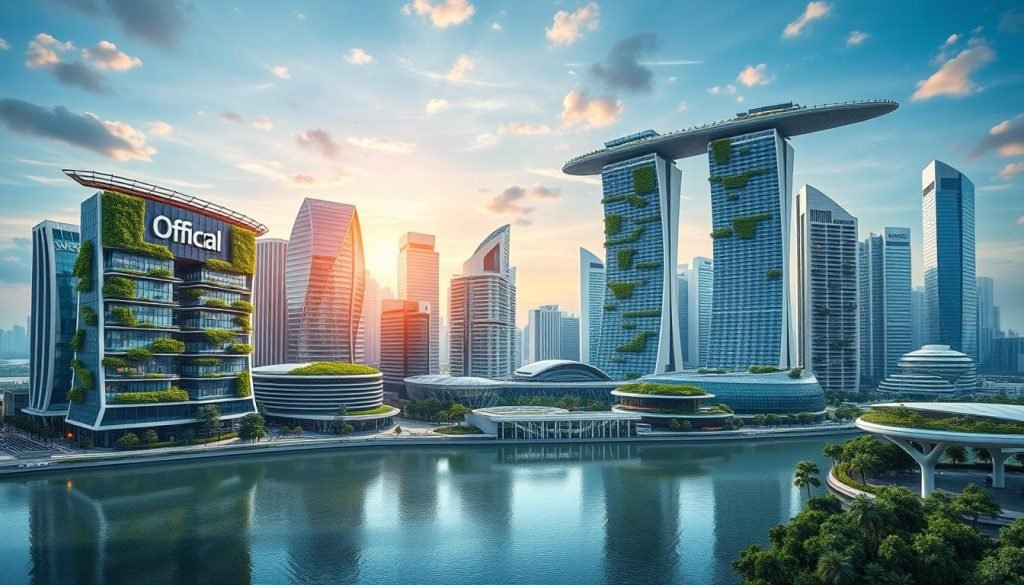
Investors and developers are now working on making buildings greener. They’re adding sustainable features to new buildings and upgrading old ones. This includes using green materials, energy-saving systems, and water-saving tech.
These changes can cut down on greenhouse gas emissions and energy use. This makes properties more appealing to tenants and buyers who care about the environment. With 83% of occupiers and 78% of investors seeing climate risk as a financial threat, sustainability’s role in property investments in Singapore will grow.
Conclusion: Strategic Insights for Investors in 2025
Singapore’s commercial property market is set to change by 2025. Investors need to think about several important things. The market’s strength and growth chances, especially in tech and electronics, look good. But, economic ups and downs and changing what people want in a space are big hurdles.
Investors should look at properties that fit long-term trends like being green and tech-friendly. Being able to change with the times is key. The best investments will likely be in top spots, green buildings, and places that are growing fast.
Keeping up with market trends, government rules, and world economy news is vital. This will help investors make smart choices in Singapore’s fast-changing property scene. By staying alert and quick to adapt, investors can make the most of the market and reach their goals.