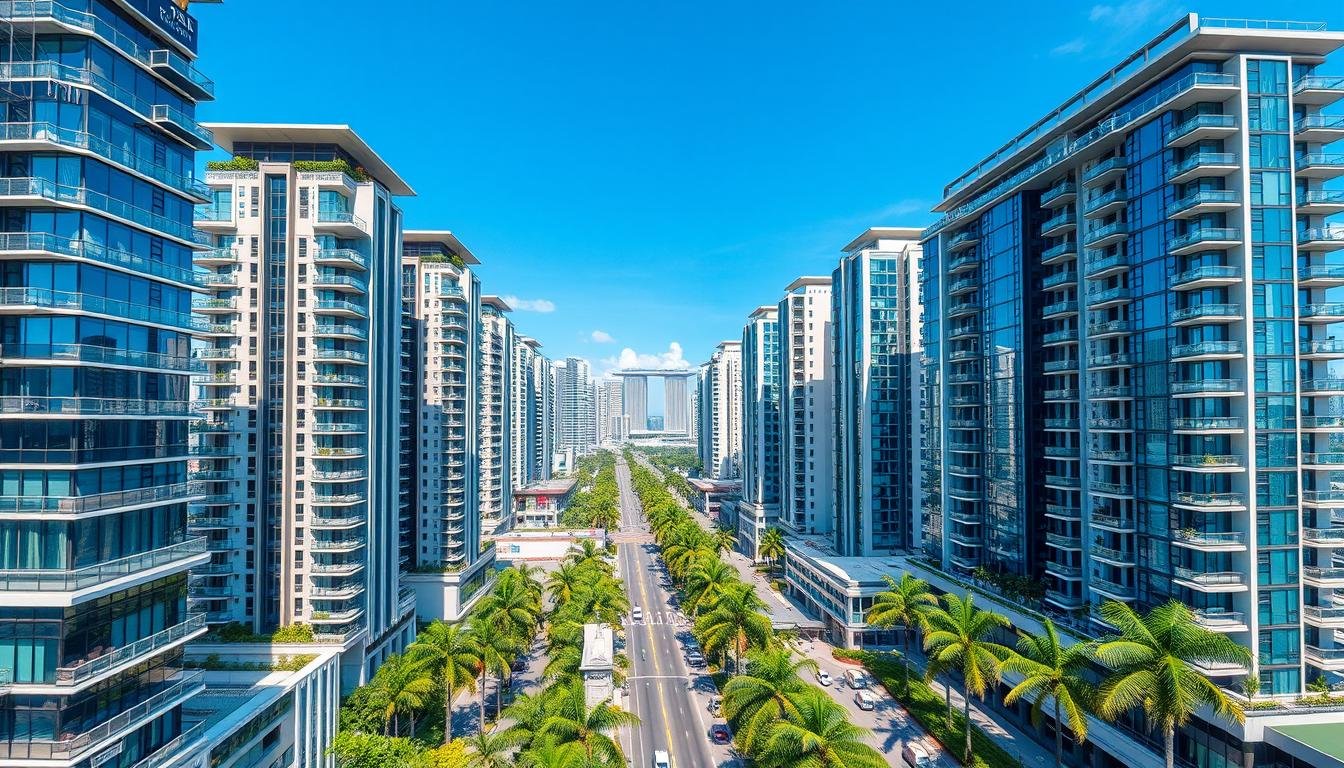
The Singapore property market is changing fast. It’s key for investors and homebuyers to know the common mistakes that can ruin their plans. In 2025, the market will stay strong thanks to good economy, government rules, and smart plans.
Urban changes, suburban living, green focus, and more foreign money are big trends. These changes offer great chances, but buyers must be careful to avoid big mistakes.
Buyers should not skip research and due diligence. They should also think about money and rules carefully. Knowing these common errors and planning well can help succeed in the Singapore market in 2025.
Key Takeaways
- Understand the nuances of the Singapore property market, including evolving trends and regulations.
- Conduct thorough research and due diligence to make informed decisions.
- Carefully assess the financial aspects, including affordability, financing options, and potential risks.
- Stay up-to-date with regulatory changes that may impact property purchases and investments.
- Seek professional guidance to navigate the complexities of the Singapore real estate landscape.
Understanding the Singapore Property Market
The Singapore property market in 2025 is changing fast. New areas like the Greater Southern Waterfront and Tengah are leading the way. These changes are making the Singapore Housing Market more exciting.
More people are choosing to live in suburbs. This is because of work-from-home trends and better transport links. Also, homes that are good for the planet and have smart features are now in demand.
Interest rates and government rules are big factors in the market. Rental demand is high, thanks to a growing population and more expats. The average price in the Core Central Region is now over $3,000 per square foot.
Singapore has a lot of homes, with about 370,000 non-landed private properties. The population density is very high, over 8,000 people per square kilometer. This means high demand and rising prices.
People are keeping their homes for longer, around 9-10 years. This shows the market’s health. With a GDP per capita over $90,000, Singapore is a great place for property investment.
Overlooking Research and Due Diligence
Buying Property Listings Singapore or Residential Properties Singapore needs careful research and due diligence. Skipping this step can cause big mistakes and regrets later. As a smart buyer, look into similar properties, know average prices, and think about your future needs.
Looking into neighborhoods, amenities, and future plans is key. Condominiums are popular for their shared facilities. Landed properties, like bungalows, terraces, and semi-detached houses, have their own special points to consider.
It’s also important to check your finances. Look at your budget, financing options, maintenance fees, and property taxes. Missing these details can lead to unexpected costs and financial trouble later.
Talking to professionals, like real estate agents and legal advisors, can help a lot. They offer valuable advice and help you understand the Singapore property market. Government sites like the Urban Redevelopment Authority (URA) and the Housing and Development Board (HDB) are great for property info and rules.
Remember, spending time on research and due diligence is worth it. It helps you avoid big mistakes and makes sure you choose wisely, fitting your goals and budget.
Ignoring the Financial Aspect
When buying a property in Singapore, financial planning is key. You need to think about the down payment, monthly loan payments, and other costs. Make sure your monthly expenses don’t take up more than 30-40% of your salary.
Hidden costs like property taxes and renovation can surprise you. Not planning for these can hurt your finances. It’s smart to save enough and not use all your money for the down payment.
Our research shows that 100% of people who have lost money in Singapore property have spent less than 1 hour researching the market. Good financial planning and research can help you avoid mistakes. This way, you can make smart choices about your Property Investment Singapore.
Even though Property Prices Singapore are high, careful planning can lead to a good investment. Understanding the market and your finances is crucial. This will help you make a successful property purchase in Singapore.
Underestimating the Impact of Regulations
When you buy property in Singapore, knowing the government’s rules is key. The market is shaped by laws like the Minimum Occupancy Period (MOP) and the Additional Buyer’s Stamp Duty (ABSD).
The MOP lasts from 5 to 20 years, depending on the HDB flat type. Selling before the MOP ends can lead to penalties or restrictions. The ABSD also raises the cost of buying more than one property, with a 20% rate for citizens on their second property.
Foreign buyers face even more challenges, like higher stamp duties and stricter rules. It’s crucial to understand these regulations to avoid costly errors.
Knowing the rules helps buyers plan better and take advantage of the market’s growth. Keeping up with Singapore Property News and Real Estate Singapore is vital for a successful investment.
Skipping Professional Help
Working with professional agents and lawyers in the Singapore property market is very helpful. Real estate agents offer valuable insights and handle negotiations. They also help with the complex paperwork in property deals. But, buyers should watch out for agents who push for quick sales over what’s best for their clients.
Lawyers are key in making sure the legal side of buying a property is right. They check contracts, make sure rules are followed, and protect the buyer’s rights. Without their help, buyers might face legal issues and problems later on.
For example, a tenant in Singapore faced big extra costs from a property agent. These included 435 SGD for a water heater, 200 SGD for a toilet seat, and 2,800 SGD for a monitor screen. The agent wanted to take 75% of the tenant’s deposit, but the issue was fixed after the tenant threatened to sue. The agent then lowered the cost of the monitor screen by 1,400 SGD.
By teaming up with Property Agents Singapore and real estate lawyers, buyers can feel more confident in the Real Estate Singapore market. They make sure their interests are looked after and their investments are secure.
Failing to Consider Resale Value
When you buy a property in Singapore, think about its resale value. The location, age of the property, nearby amenities, and future plans matter a lot. Smart buyers look at similar properties to understand the market and see how much the property might grow in value.
Freehold properties might be better for long-term investors. Leasehold properties could be better for shorter times. But, it’s key to know the details of each type and how they affect resale value. For example, resale units near places for events like weddings or funerals might be harder to sell.
Don’t ignore small details like noise from activities like Zumba or Taekwondo in new flats. Also, properties near religious buildings or empty land might face problems from big events or future projects. These could hurt the resale value.
By thinking about resale value and potential issues, Property Investment Singapore buyers can make better choices. This helps them get the most out of their Singapore Housing Market investment in the long run.
Rushing into a Decision
One big mistake when buying property in Singapore is rushing. Making impulsive decisions can lead to costly errors you might regret. Signs of impatience include not doing enough research, feeling pressured by agents or sellers, or ignoring warning signs about the property.
It’s important to take your time when investing in Singapore Property Listings Singapore. This helps you plan your finances better, compare properties thoroughly, and understand your long-term needs. Being patient can help you find better deals and properties that fit your budget and preferences.

The Singapore Property market is competitive, but rushing can lead to bad choices. By taking your time to research and analyze, you’re more likely to find a property that meets your needs and offers long-term value. Be patient and make informed decisions for a successful property investment in Singapore.
Not Asking the Right Questions
When you invest in Property Investment Singapore or the Real Estate Singapore market, it’s key to ask the right questions. You need to know why the seller is selling, the property’s history, and any issues. Asking about the seller’s reasons, like if it’s part of an en bloc sale, can give you important insights.
It’s also important to understand your financing options. You should know the difference between HDB loans and bank loans. By comparing interest rates and loan terms, you can make a better choice. Asking about future developments, maintenance concerns, and the property’s condition can reveal crucial details that affect your investment.
Talking to a knowledgeable real estate agent can help you with these questions. They have the expertise and local market knowledge to guide you. This can help you make a smart decision when investing in Property Investment Singapore or the Real Estate Singapore market.
Neglecting to Inspect the Property
When buying Residential Properties Singapore, a detailed property inspection is key to avoid unexpected costs. Skipping this step can uncover hidden problems like structural issues, water damage, or pest infestations. For those looking at Singapore Property, it’s vital to check the home’s condition, especially for resale homes.
Inspecting a property means looking for signs of wear, the quality of any updates, and what maintenance it might need. While it might seem like a hassle, getting a professional inspector can reveal issues you might miss. These experts can spot problems that could affect the property’s value and livability.
By carefully inspecting the property, you can make a smart choice and avoid future surprises. This step might seem time-consuming, but it’s a crucial part of buying a home in Singapore. Ignoring the inspection can lead to unexpected costs and problems, making it a mistake to avoid in the Singapore Property market.
Disregarding Future Developments
Smart buyers in Singapore know that future changes can greatly affect property values and living conditions. The city is always growing, with new MRT lines, expressways, and commercial areas. These projects can help predict property trends.
Keeping up with Singapore’s urban plans, like the URA Master Plan, can give you an edge. Areas like the Greater Southern Waterfront and Jurong Lake District are set for big changes. These could be great for investing as the area evolves.
Luxury property prices in Singapore’s Core Central Region (CCR) are on the rise. Resale luxury condos saw a 17.6% price jump in Q1 2024. New luxury properties in the CCR hit $3,254 per square foot in Q2 2024, even with fewer sales.
Not considering future developments can mean missing out on good opportunities. By keeping an eye on long-term changes, buyers can make better choices. This way, they can meet their investment goals more effectively.

Ignoring the Importance of an Exit Strategy
Investing in the Singapore property market requires a solid exit strategy. Market changes can affect property values and rental income. It’s key to think about possible scenarios like economic downturns or policy changes.
Thinking ahead for life changes, like a new job or starting a family, is important. Being flexible and diversifying can reduce risks in property investments. Successful investors in Singapore keep a long-term view and prepare for unexpected market shifts.
Recognizing the need for an exit strategy helps investors make better choices. It prepares them to seize opportunities or face challenges in their property journey. Without it, they might face financial trouble and miss out on chances, affecting their Singapore property investment success.