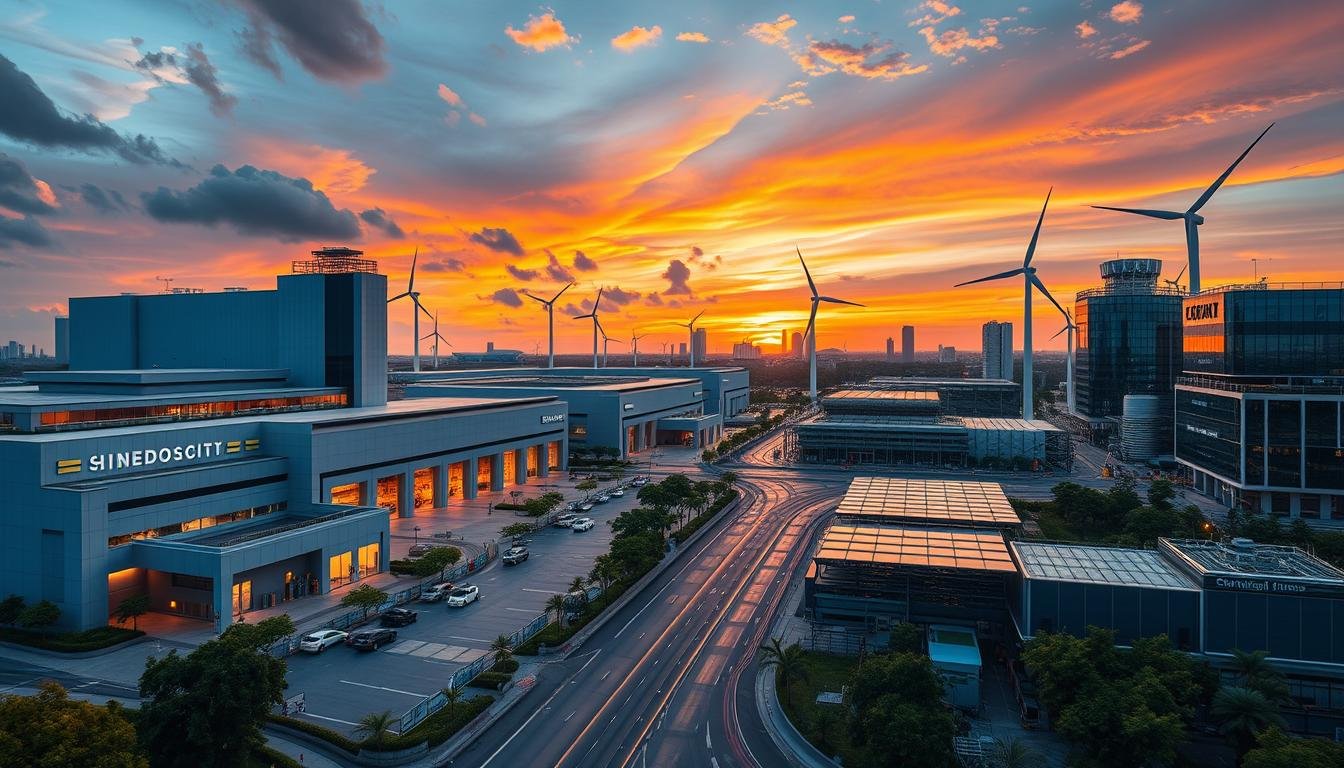
Singapore’s industrial real estate market is strong, even with tough economic times. People want top-notch warehouse spaces and logistics facilities. This demand is pushing the sector forward. The country’s great location, infrastructure, and business climate attract investors and businesses.
As the economy grows, so will the need for spaces that support advanced manufacturing and e-commerce. This makes industrial real estate key to Singapore’s smart economy.
Recently, the average interest rate for financing in Singapore was about 2.5%. Rental rates for industrial properties went up by 2.0% in Q1 2024. Singapore aims to become a global manufacturing hub. This requires smart and innovative planning for industrial land, given the limited space.
The government plans to build 23,000 public flats in 2023. The growth of single-family offices in Singapore from 400 in 2020 to 1,400 by 2023 will also boost the sector.
The idea of adaptive reuse in the Industrial Government Land Sales (IGLS) at Kallang Way is exciting. It aims to keep 100% of existing terrace factories for manufacturing. This approach reduces carbon footprint and saves energy.
Master planning in Singapore must evolve with the city. It should involve the community, making industrial real estate a vital part of the smart economy.
Key Takeaways
- Singapore’s industrial real estate market has shown resilience amid macroeconomic headwinds.
- The demand for high-quality warehouse spaces and logistics facilities is driving growth in the industrial real estate sector.
- The country’s strategic location, world-class infrastructure, and favorable business environment make it an attractive destination for investors and businesses in the smart economy.
- Industrial property rental rates increased by 2.0% in Q1 2024.
- The development of Singapore into a global manufacturing hub necessitates dynamic and innovative master planning for industrial land.
- The concept of adaptive reuse suggests a focus on preserving existing terrace factories while adapting them for continued manufacturing use.
Current Landscape of Singapore’s Industrial Real Estate Market
The industrial real estate market in Singapore is seeing both ups and downs. The JTC All Industrial Rental Index went up by 1.0% in Q2 2024. This is the 15th time in a row that rents have risen.
This increase is mainly because of the high demand for top-notch warehouse spaces and logistics facilities. The multi-user factory segment is growing fast, with rent hikes of 1.5% in Q2 2024. The occupancy rate for these factories also went up, reaching 91.3% in Q2 2024.
But, the single-user factory segment is growing slower, with rent increases of 1.3% in Q2 2024. The warehouse segment saw a moderate growth, with rents going up by 0.5% in Q2 2024.
Despite these positive trends, the market faces challenges like rising construction costs and labor shortages. There’s also more space coming, with about 8.5 million square feet of new industrial space expected in the second half of 2024. It’s key for investors and users to keep up with the latest in the industrial real estate market in Singapore.
Impact of Smart Technology on Industrial Properties
Smart technology is changing the industrial property sector in Singapore. It makes operations more efficient and productive. Technologies like automation, robotics, and data analytics are now common in industrial spaces.
These tools help businesses run better and save money. For example, smart technology can spot problems early and cheaply. This prevents big financial losses.
Smart technology also helps save energy. Smart thermostats can cut energy use by up to 30%. They adjust based on who’s there and their habits.
LED bulbs use much less energy than old bulbs. They use at least 75% less. This makes industrial spaces more sustainable and efficient.
Smart tech can also make places more comfortable. It lets people adjust energy use, temperature, lighting, and air quality as needed.

Watching energy use in real-time can save a lot. Owners can save 10-15% by monitoring closely. Smart devices can even learn and save more energy over time.
As Singapore’s industrial scene grows, smart tech will be key. It will help the sector grow and stay sustainable.
Digital Transformation in Industrial Spaces
Digital transformation is changing industrial spaces in big ways. It brings many chances for growth and betterment. Companies using digital tech can work better, save money, and boost efficiency. But, this change also brings big challenges, like needing to spend a lot on new tech and finding skilled people to run it.
Recent studies show 85% of top managers see digital transformation as key to success. This move to digital is because companies need to keep up with fast market changes. Companies that go digital well can see big wins, like better customer service, more sales, and smoother operations. For example, digital leaders in 2020 saw a 47% return on shareholder value, while laggards saw only 27%.
Using tech like AI, IoT, and data analytics can make industrial operations better. It helps predict when things need fixing and improves supply chain management. Digital transformation also opens up new ways to make money and new business models, like product-as-a-service. As companies go through this change, they must be ready to face challenges and seize opportunities to stay on top.
In Singapore’s smart economy, digital transformation in industrial spaces is key for growth and staying competitive. By using digital tech, companies can work smarter, save money, and be more eco-friendly. As the industrial world keeps changing, it’s vital for companies to focus on digital transformation and invest in the right tech and skills.
Emerging Industrial Property Categories
The industrial property sector in Singapore is changing. New types of industrial spaces are growing. These spaces are made for companies in e-commerce, logistics, and pharmaceuticals. Data centers and cold storage facilities are becoming more popular.
These new spaces are in demand because companies need specific features. They want high ceilings, open layouts, and the latest technology. These emerging categories will shape Singapore’s industrial real estate future.
Investors and companies are seeing the value in these new spaces. They offer savings, better efficiency, and productivity. As demand grows, we’ll see more investment in these areas. This will drive innovation and growth in the sector.
Government Initiatives Shaping Industrial Real Estate
The government has a big role in the industrial real estate sector in Singapore. It supports growth and competitiveness with various initiatives. The Productivity Innovation Project (PIP) scheme helps by funding up to 70% of technology costs. This scheme aims to improve the business environment and encourage investment.
Several agencies regulate and oversee the Built Environment sector. The Building and Construction Authority (BCA) leads in this area. The Council for Estate Agencies (CEA) oversees property agencies and agents. The Urban Redevelopment Authority (URA) promotes architecture and urban design excellence.
The government’s efforts have made industrial real estate in Singapore attractive. Many companies have benefited from the PIP scheme and other initiatives. The focus on technology and innovation has driven growth and competitiveness.
Investment Opportunities in Smart Industrial Properties
Smart industrial properties are a great investment, promising long-term growth and returns. Studies show that about 65% of real estate leaders face higher costs due to keeping and hiring employees. This makes these properties a smart choice for investors aiming to improve operations.
Using proptech solutions like predictive analytics and AI can save energy and cut costs. This boosts the appeal of smart industrial properties as a solid investment, with the chance for significant profits.

Gen AI in real estate also helps in customer engagement and better investment choices. Gen AI tools work with big data to find the best investment spots or tenant needs. With the chance to add $110 billion to $180 billion in value, these properties are a top pick for investors.
In summary, smart industrial properties are a unique blend of attractiveness and investment chances. They are a great choice for investors wanting to expand their portfolios and stay ahead in the real estate world.
Sustainability and Green Technology Integration
Singapore’s industrial real estate is moving towards sustainability. Companies are using green technologies to cut down on environmental harm. This change is aimed at lowering energy use and encouraging eco-friendly actions.
Renovation services in Singapore are now using green technologies more. This shift helps make renovations more sustainable and energy-efficient. Sustainable materials like low-VOC paints and reclaimed wood are becoming popular. Also, water-saving features like rainwater harvesting and low-flow taps are being added to renovations.
Using green technology in industrial real estate can save a lot of money. It reduces energy and water use. Following rules from the Building and Construction Authority (BCA) and the Housing and Development Board (HDB) also means adopting sustainable practices. As Singapore pushes for more sustainability, the industrial real estate sector is key to lowering the city-state’s carbon footprint.
Location Strategies for Smart Industrial Facilities
The importance of location in industrial real estate is huge. Companies need to think about how close they are to markets, transportation, and talent. The right location can make a big difference in growth and staying competitive.
Studies show that a facility’s location affects its ability to attract workers, get materials, and serve customers. In Singapore, the Jurong Island Chemicals Hub is a key player in the energy and chemicals sector. It has over S$50 billion in investments, showing how vital a good location is.
Smart industrial facilities need to pick their location wisely. They should be close to transportation and have access to skilled workers. This helps cut costs, boosts productivity, and makes them more competitive.

In summary, choosing the right location is key for smart industrial facilities. It affects how well they work, their costs, and how competitive they are. By picking the best location, companies can grow and succeed in the industrial real estate market.
Infrastructure Requirements for Smart Industrial Buildings
Smart industrial buildings need strong infrastructure to work well. This infrastructure is key for their efficiency. Property owners can control internet services, making changes easier for tenants.
A reliable network based on open standards is vital. It connects different smart building technologies from various vendors.
These buildings need access to efficient infrastructure. This supports their operations and helps them grow. Smart building technology can also create new revenue streams.
Property owners can get better deals with service operators by owning the fiber network. This avoids being locked in with service providers. The smart building ecosystem can also bring financial gains that go beyond the initial costs.
In Singapore, aiming for 80% green buildings by 2030 is the goal. Investing in IT infrastructure is key before adding smart building tech. This helps maximize business chances in industrial real estate.
Understanding what infrastructure is needed helps property owners make smart choices. They can build sustainable, efficient buildings that meet their tenants’ needs.
Risk Assessment and Mitigation Strategies
Risk assessment and mitigation are key in industrial real estate. They help companies manage risks and protect their investments. A risk assessment involves figuring out risk levels and finding ways to lessen their impact.
This process helps companies focus on the most important risks. They can then create plans to deal with these risks effectively.
There are several ways to mitigate risks, like avoiding them, accepting them, or transferring them. Companies might choose not to invest in risky areas or use insurance to transfer risks. It’s important for all stakeholders to be informed about these plans.

Keeping an eye on risks is important in all businesses. It shows the need for constant risk monitoring. Tracking and evaluating risks helps measure the success of risk mitigation plans.
By being proactive in risk mitigation, companies can reduce losses. This way, they can also increase the returns on their industrial real estate investments.
Role of Data Centers and Tech Parks
Data centers and tech parks are key for e-commerce, logistics, and finance growth in Singapore. They offer reliable data storage and processing. This is why data centers are becoming more popular in Singapore.
Singapore’s data center parks are hubs for many data centers. They make the area a strong economic center. For over a decade, these parks have been built and run, helping small and medium businesses save costs. They are also good for the environment, using less heat and carbon dioxide than single centers.
New technologies like the StatePoint Liquid Cooling system aim to cut water use by over 20%. Solar energy is also being used more in data centers. Singapore aims for an average power usage effectiveness (PUE) of 1.78, and many are working towards this goal.
Tech parks in Singapore are also growing, with more companies moving in. These parks offer fast internet, security, and maintenance. Singapore is set to become a big tech and innovation center. The growth of data centers and tech parks will keep going, thanks to Singapore’s business-friendly environment and skilled workers.
Transforming Singapore’s Industrial Landscape: A Vision for Tomorrow
Singapore is on a path to become a top smart economy. Its industrial real estate is looking brighter than ever. The country’s great location, top-notch infrastructure, and business-friendly environment set it up for big growth and success.
The change in Singapore’s industrial scene is complex. It’s driven by a focus on sustainability, new tech, and making old spaces new again. The “Reimagining Singapore’s Industrial Landscape” competition has brought forward ideas that mix industrial areas with green spaces and places for fun and community.
Singapore’s industrial real estate is ready to adopt Industry 4.0 and 5.0. This means using new tech like self-driving cars and robots, and turning old buildings into something new. This change will make spaces better used, more sustainable, and focused on people.
As Singapore grows from a Garden City to a biophilic City in a Garden, greenery and nature will play a big role. The transforming industrial landscape, future prospects, and opportunities in this area are huge. They show Singapore’s chance to be a world leader in innovation, sustainability, and quality of life.