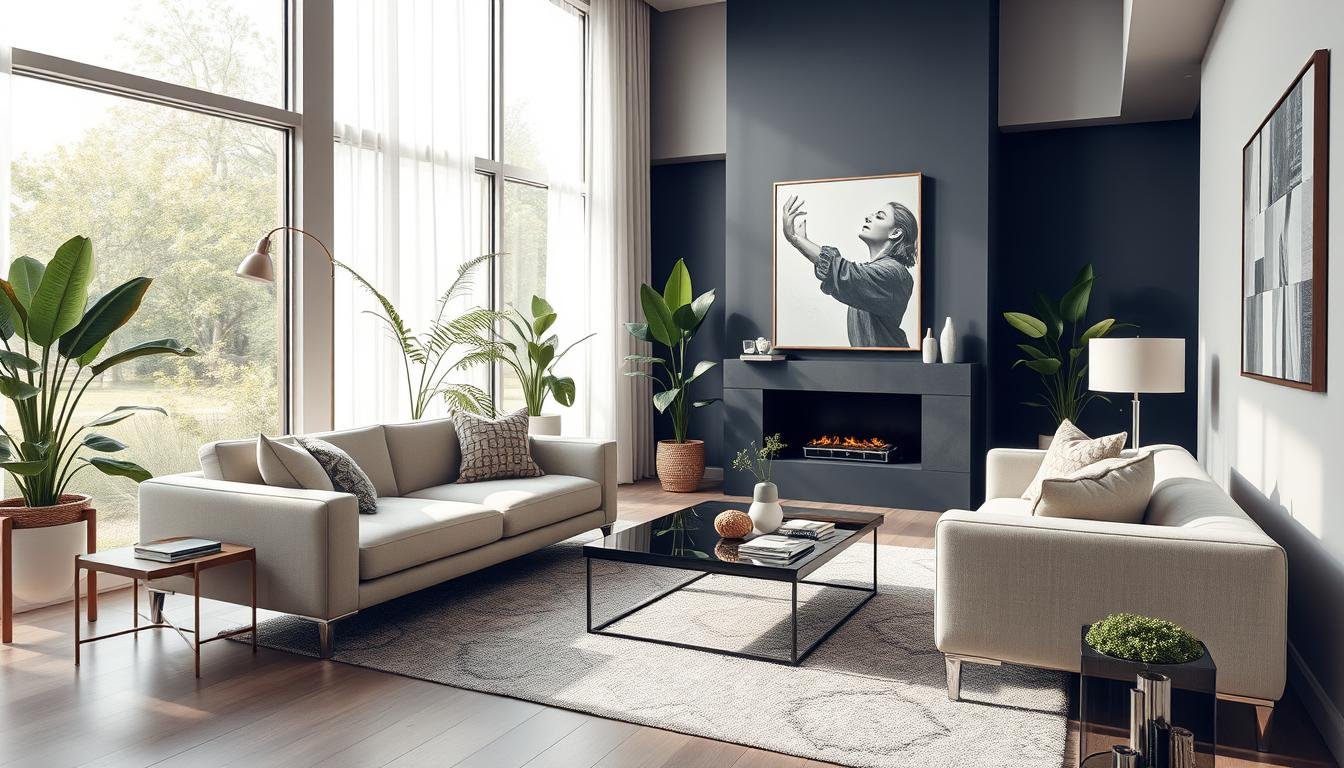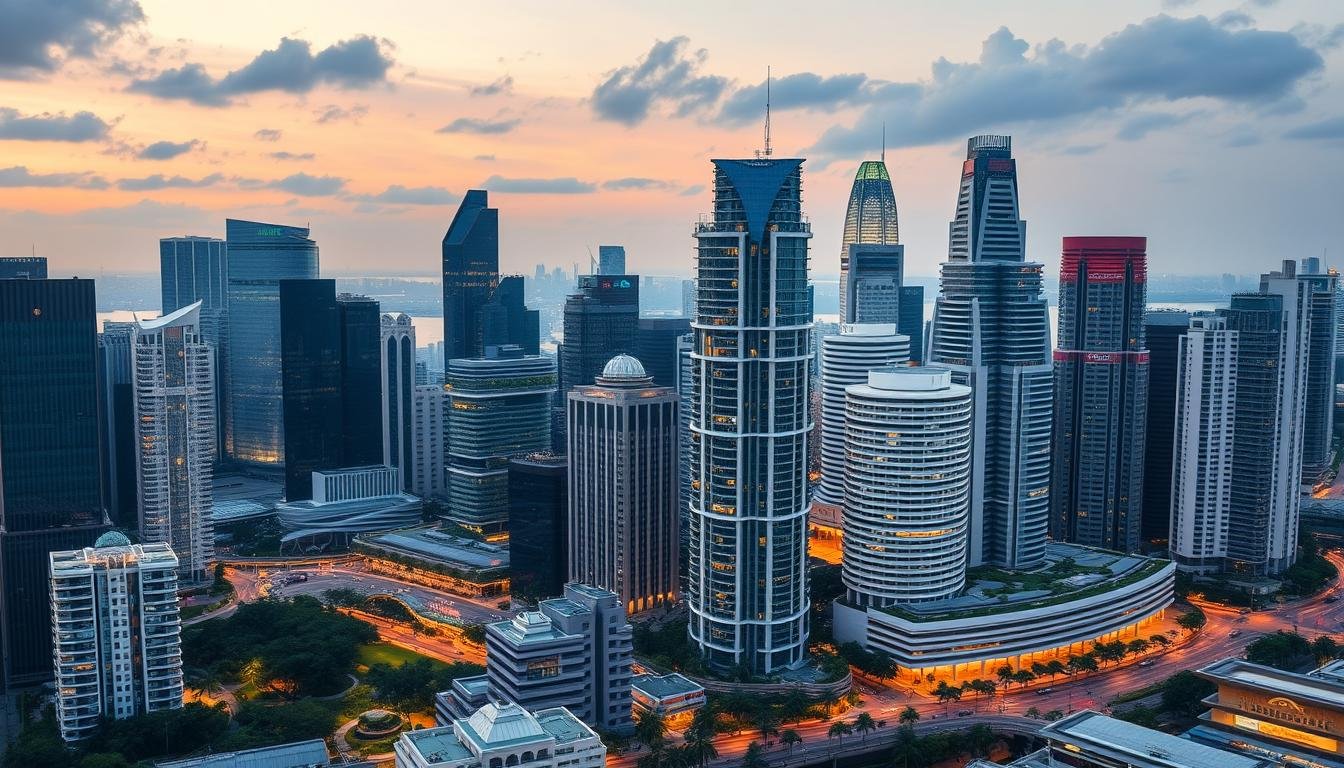
Singapore’s property market is booming, thanks to the wealth of Chinese individuals here. The demand for stylish homes and quality accessories is also on the rise. This has made prime residential areas very popular, with prices over SGD 20,000 per square meter.
The Core Central Region (CCR) has seen new home prices hit SGD 3,246 per square foot. Resale homes are selling for SGD 2,103 per square foot. Experts predict the market will grow by 4.5% in 2025. The need for office space is also up, with a 6% increase in 2025. The retail sector is expected to grow by 3-5% in 2023, thanks to more tourists.
There’s a growing interest in smart home tech and energy-saving buildings. This trend is making new buildings more secure and energy-efficient. As the market evolves, understanding the importance of home decor and design is key. It helps increase property value and attract buyers.
Key Takeaways
- The Singapore property market is experiencing significant growth, driven by the increasing wealth of Chinese individuals and the demand for home decor and interior design.
- The Core Central Region (CCR) has seen new home prices reach SGD 3,246 per square foot, while resale homes are selling for SGD 2,103 per square foot.
- The projected growth rate for Singapore’s property market in 2025 is estimated at 4.5%.
- The demand for office space has increased, with a 6% jump in 2025, and the retail sector is expected to grow by 3-5% in 2023 due to tourism recovery.
- The growing demand for smart home technologies and energy-efficient building practices is driving the market, with a shift towards enhanced security and energy savings in new buildings.
- Home decor and interior design play a critical role in boosting property value and attracting buyers.
- The Singapore real estate market is predicted to reach a market size of USD 64.04 billion by 2029.
Understanding ASEAN’s Economic Influence on Singapore Real Estate
Singapore’s economy is linked to ASEAN, acting as a key trade and investment hub. The region’s GDP of US$2.4 trillion and 4.7% growth in 2015 attract businesses and investors. This has boosted Singapore’s real estate demand, with 
ASEAN countries have a young, growing population, driving economic growth in manufacturing, trade, and services. This growth benefits Singapore’s real estate, drawing investors. As a result, home decor ideas and wall art are key in Singapore’s properties. They help create unique, attractive spaces that show the city-state’s cultural and economic diversity.
The region’s infrastructure spending has grown 4% to 13% in the last five years. This growth positively affects Singapore’s real estate. With a young population, ASEAN’s economy is expected to keep growing. This demand for furniture and other items will keep Singapore’s real estate market strong. Home decor ideas and wall art are essential in shaping this market.
Singapore’s Evolving Property Landscape in Response to Regional Growth
Singapore’s property market is changing fast. The city aims to have net-zero buildings by 2030. This has led to a rise in home renovation projects, focusing on green designs.
The government’s Green Mark Certification program is key. It encourages energy efficiency and cuts down on carbon emissions. This push for sustainability is driving the changes.
Now, room design elements like rooftop gardens and vertical green walls are popular. They make properties look better and help the environment. Also, using decorative accents from eco-friendly materials is becoming more common.
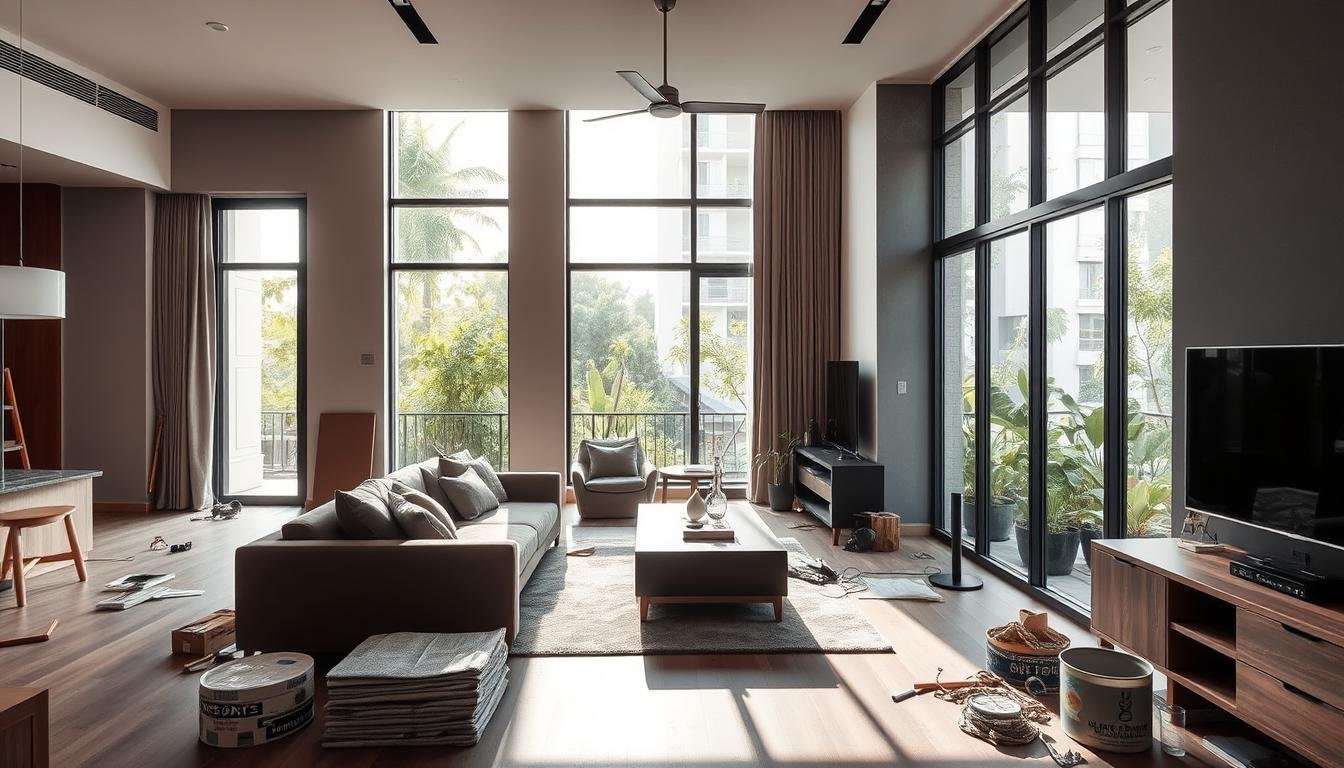
The government’s push for sustainable properties is clear. There’s a growing need for energy-efficient homes. Stricter rules and incentives for green practices are changing the market.
As Singapore grows, property owners and developers must keep up. They need to focus on home renovation, room design, and decorative accents that are good for the planet.
Modern Home Decor Trends Shaped by Economic Prosperity
Singapore’s economy is booming, attracting many wealthy people. This has led to a big demand for luxury homes. Now, home decor trends are moving towards more lavish and elegant styles.
Rich colors like deep reds and forest greens are now popular. These colors are perfect for many design styles. They show a move towards more personal and creative home decor choices.

People want their homes to be both comfortable and stylish. This is why big sofas and deep chairs are in demand. The ‘quiet luxury’ style, with its focus on simplicity and quality, is also gaining popularity.
As the love for luxury homes grows, we can expect to see even more creativity. This will be in the use of furniture, accessories, and design elements. It will help create unique and elegant living spaces.
Investment-Driven Changes in Property Customization
Investors want to make their properties stand out. They’re looking for unique designs and features. This shift in home decor ideas aims to boost property value and attract buyers.
Decorative accents and room design are key. Investors are using new tech, like AI, to improve property design. For instance, virtual reality tours let buyers see themselves in the space, making sales more likely.
Recent studies show AI in real estate can add huge value. It could bring in $110 billion to $180 billion. Also, AI helps real estate companies make more money, with a 10% increase in net operating income.
In Singapore’s changing real estate market, customization is vital. PropTech and AI tools help investors design unique properties. By focusing on home decor, decorative accents, and room design, investors can increase their property’s value and stay competitive.
Contemporary Home Decor Solutions for Singapore Properties
The property market in Singapore is changing fast. Homeowners now want spaces that look good and work well. This is why furniture that does more than one thing, like sofas with secret storage, is getting popular.
Wall art is also key in modern homes. People choose pieces that show their personality. Natural materials like wood and stone are used to make spaces look unique and interesting. Mixing different textures and materials adds depth and visual appeal.
Modern design is all about simplicity. It’s about keeping things simple and calm, with colors like beige, gray, and white. Furniture that hides things is also big, to keep spaces tidy. As more people want modern decor, we’ll see even more creative and useful designs in Singapore’s homes.
Adapting Property Designs to Regional Market Demands
Singapore’s property market is strong, even with worries about the economy slowing down. It’s key to think about culture and the environment when designing homes. The global home decor market was worth USD 728 billion in 2023. It’s expected to hit USD 1,316 billion by 2032, growing at 6.8% each year.
Home decor trends are moving towards being more culturally aware and eco-friendly. This means using local materials and traditional designs. This shift is also seen in the growing need for interior design that fits regional tastes. Home accessories and decorative accents are becoming more important too, as they make a space look better.
About 55% of people lived in cities in 2018, and this number is rising. Around 70% of people want to improve their homes and are ready to spend on it. This is a big chance for property developers to add interior design that city folks will love.
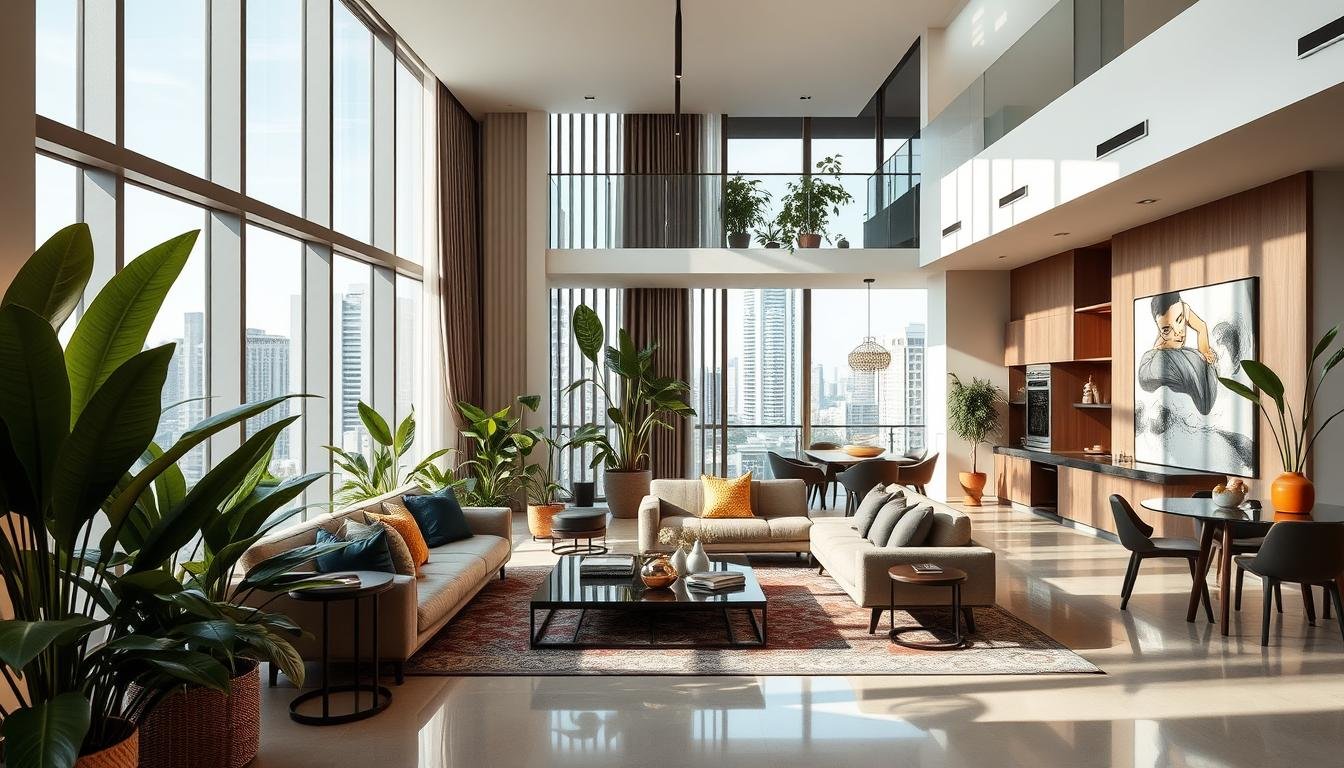
The Asia-Pacific region is expected to grow fast, thanks to more people in the middle class and city growth. So, property developers in Singapore need to change their designs to meet this new demand. By using home accessories and decorative accents that show local tastes, they can make homes that are both useful and beautiful.
The Rise of Sustainable Home Decor in Singapore Properties
Singapore is leading the way in sustainable home decor. About 70% of homeowners now value sustainability in home renovations. This has led to a big demand for eco-friendly materials and practices.
Organic modern interior design is becoming more popular. It focuses on natural materials, energy-saving systems, and green technologies. This shift is driven by Singapore’s focus on innovation and environmental protection.
Homeowners are choosing sustainable materials like bamboo and reclaimed wood. Over 50% of HDB residents pick eco-friendly materials for their renovations. They also prefer neutral colors inspired by nature, with 55% choosing earth tones and muted hues.
Minimalist furniture made from natural materials is also gaining traction. About 60% of new furniture purchases in Singapore reflect this trend. This shows a growing interest in simple, sustainable designs.
There’s a rise in using plants and natural textiles in interior designs. About 40% of homeowners add greenery to enhance the organic feel. Market analyses suggest a 25% growth in sustainable decor over the next five years.
As people become more eco-conscious, the demand for sustainable home decor grows. Brands like Goodrich, Dulux, and Dekton are responding with eco-friendly products. This trend is expected to drive innovation in the industry.
Homeowners are now looking to reduce their carbon footprint. Sustainable materials and practices in home decor are becoming key. Buildings can last from 30 to 50 years with standard materials, but hundreds of years with durable ones.
As Singapore grows, so will the need for sustainable home decor. This will drive demand for eco-friendly materials, energy-efficient systems, and green technologies in home renovation, room design, and furniture.
Property Value Enhancement Through Strategic Home Decor
Strategic home decor is key to boosting property value and appeal in Singapore. By using the latest home decor trends, homeowners can make their homes more appealing. This is done by adding decorative accents like lighting and furniture to create a welcoming feel.
Recent data shows that home renovations that follow current trends can increase property value by 10% to 15%. This shows how important interior design is in boosting property value. For example, homes with modern, neutral colors can attract up to 30% more buyers than those with outdated colors.
Exterior features like landscaping and curb appeal also play a big role in property value. Improving curb appeal through landscaping can return about 150% of the investment. Adding outdoor lighting and decorative accents can make the exterior look great and increase the property’s value.
In conclusion, strategic home decor is vital for increasing property value in Singapore’s competitive market. By using decorative accents, interior design, and home decor ideas, homeowners can make their properties more attractive and valuable to buyers.
Cross-Cultural Design Elements in Modern Singapore Homes
Singapore’s property market shows a mix of cultures, with 74% Chinese, 13% Malay, and 9% Indian. This mix is seen in home decor choices, making each space unique and diverse.
A survey found 65% of homeowners like designs that mix old and new styles. About 55% of designers use traditional fabrics and Chinese porcelain in their work. This shows how important cultural touch is in design.
Using local artwork and cultural items like Peranakan tiles can boost a home’s value by 20%. Spaces that respect cultures make homeowners 40% happier. Also, 60% of designs now include furniture that serves more than one purpose, fitting Singapore’s busy lifestyle.
Half of designers aim to tell stories through their designs, using wall art and decor. The interior design market in Singapore is set to grow 4.1% each year until 2026. This growth is due to more people wanting homes that reflect their cultural backgrounds.
Shaping Tomorrow’s Singapore Properties: A Design Perspective
The property market in Singapore is changing fast. Architects and interior designers are using new tech, green materials, and smart home tech. They aim to make homes that fit the needs of Singapore’s growing and varied population.
They’re adding solar panels, energy-saving appliances, and using natural light and rainwater. This shift in focus is all about making homes sustainable and eco-friendly.
In Singapore, homes are about to get a tech makeover. Architects are looking into new ways to reuse old buildings and adding green features. They’re designing homes that use less energy and fit well with Singapore’s hot weather.
This approach makes homes better for living and helps Singapore become more sustainable. It’s a big step towards a greener future.