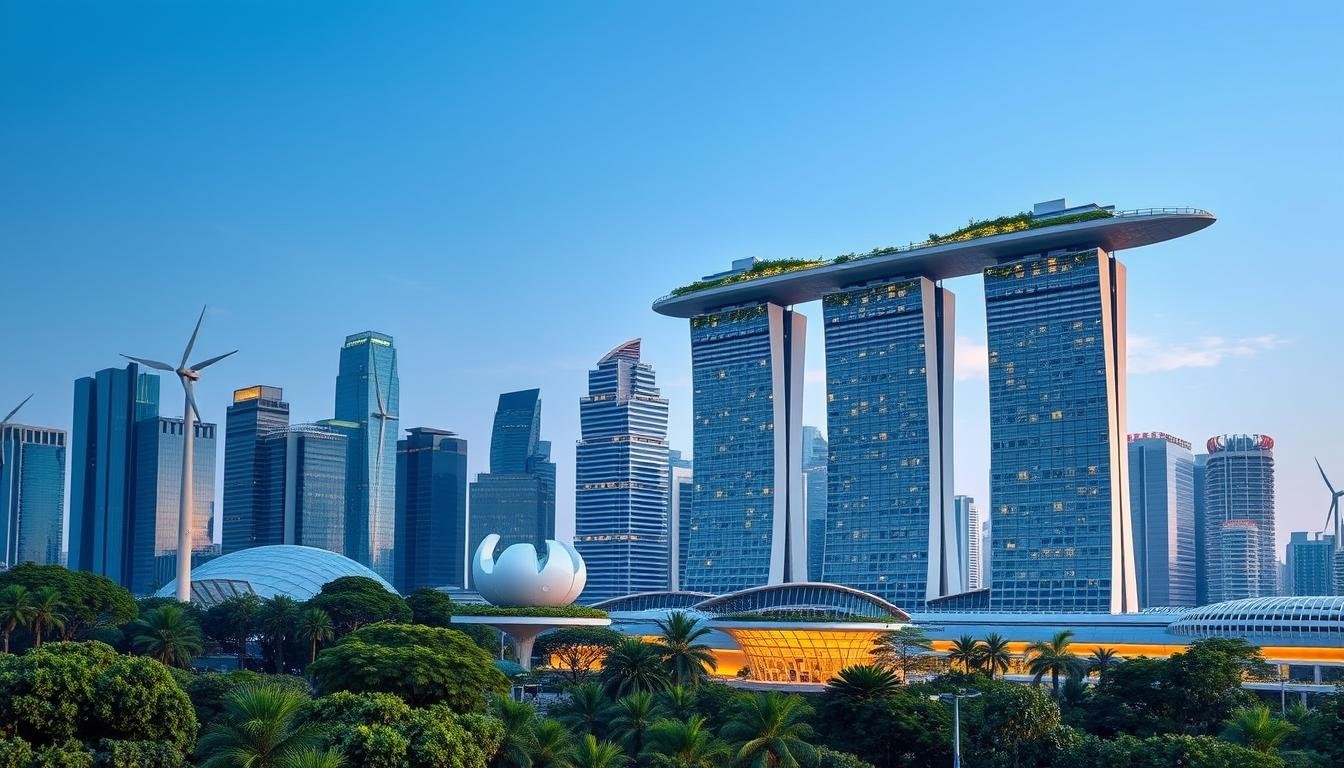
In Singapore, buildings use over a third of all electricity. The Building and Construction Authority (BCA) aims to cut this down. They’re doing this through rules, bonuses, and research. This push has changed how homes are designed, focusing on saving energy.
The Green Mark Criteria was introduced in 2021. It has made buildings use less energy than before. Now, homes are getting upgrades to save on bills and help the planet. These changes also make homes more valuable when sold.
Energy-saving homes tend to sell for more money. Adding green spaces improves air and health. Homes with the latest tech and looks sell for more than old ones. Even small changes, like new lights or appliances, can make a big difference.
Key Takeaways
- The building sector is responsible for more than one-third of Singapore’s total electricity consumption.
- Energy-efficient design can lead to cost savings, environmental benefits, and increased resale value.
- Investing in energy-efficient appliances and systems can reduce monthly utility bills.
- Renovations that enhance functionality can improve daily convenience and satisfaction.
- Energy-efficient homes often see increased resale value, making renovations financially advantageous.
- The Green Mark Criteria provides pathways for buildings to demonstrate energy performance levels.
- Energy savings levels have increased significantly compared to previous versions of the Green Mark.
Understanding Singapore’s Energy Efficiency Requirements for Modern Home Decor
Singapore has set up many ways to make buildings more energy-efficient. The Green Mark certification is a key part of this effort. It rates how well a building does in areas like energy use, water use, and air quality.
For those planning to renovate their homes, knowing about these standards is important. It helps in making a space that is both green and efficient.
When decorating rooms, using energy-saving ideas is a smart move. This can mean using lights that use less power, adding solar panels, and smart home tech. These steps help cut down on energy use and lower bills.
Choosing energy-saving appliances and good insulation also helps. These choices make a home more eco-friendly.
By adding these energy-saving features to their renovation plans, homeowners do more than just save money. They also make their homes better for the planet and for living in.
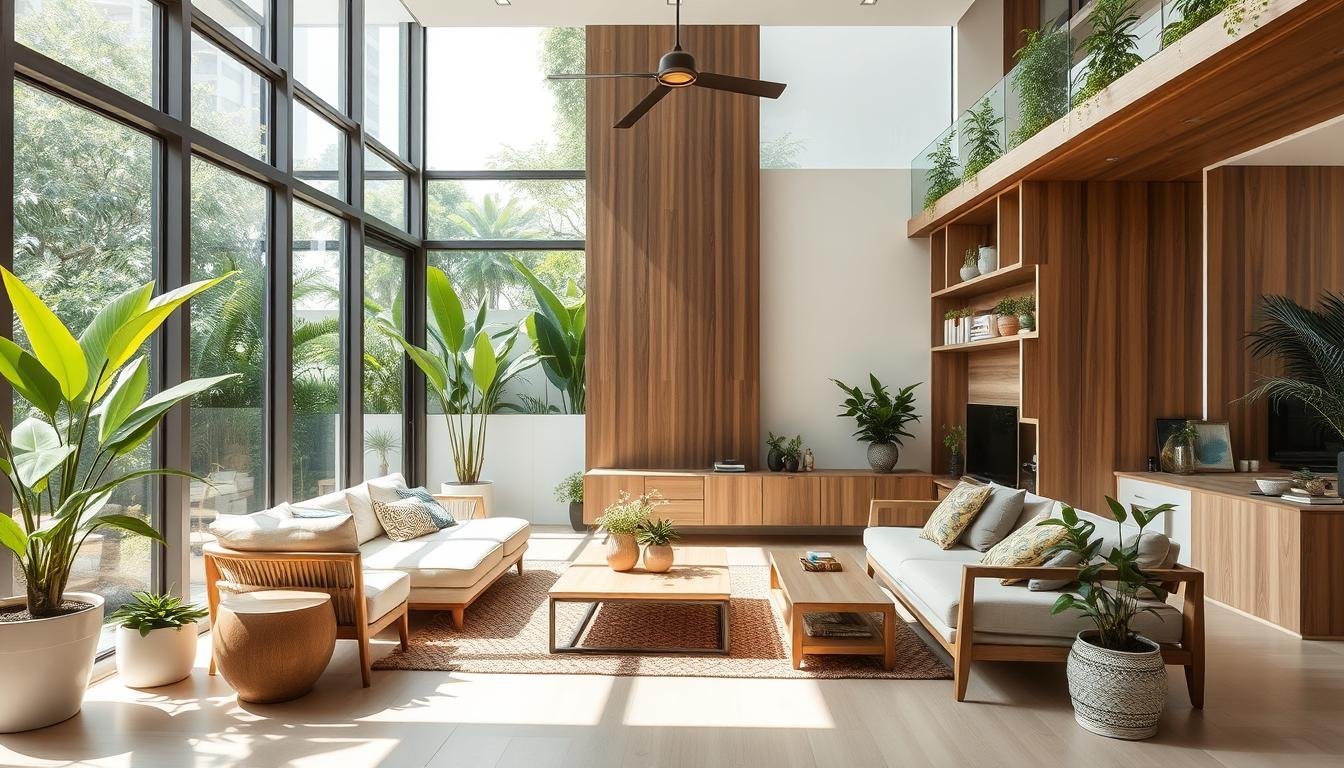
As Singapore keeps growing, making homes energy-efficient is key. Homeowners who focus on this help the planet and enjoy a better home.
Smart Window Solutions for Energy-Efficient Properties
Smart windows are changing how we think about energy in homes. They help keep the heat in and out, cutting down on energy use. This makes them great for those wanting to save energy and make their homes more efficient.
Pairing smart windows with furniture and decor can make a room look and feel better. It’s all about creating a space that’s both beautiful and functional.
The BCA says smart windows can cut energy use by up to 35 percent. They use new tech like double-glazed and low-e windows for better insulation. Plus, they can change tint to control the temperature, saving on electricity.

Getting smart windows can really cut down on your energy bills. Over time, the savings can pay off the cost of the windows. Plus, homes with smart windows often sell for more, boosting their value.
Many places offer discounts and rebates for smart windows. This makes them even more affordable. By choosing smart windows, homeowners can make their homes greener and more energy-smart. They can enjoy a stylish, eco-friendly space with the right furniture and decor.
Lighting Design Strategies for Energy Conservation
Lighting is key in interior design, home renovation, and decorating. In Singapore, saving energy is a big deal. The Building and Construction Authority (BCA) suggests using LED lights to cut down on energy use.
Old incandescent bulbs waste a lot of energy, turning 90% of it into heat. LEDs, on the other hand, use 25% to 80% less energy. Switching to LEDs can lower your energy bills a lot. For example, a 60-watt incandescent bulb costs about $4.80 a year, while a 12-watt LED costs just $1.00.
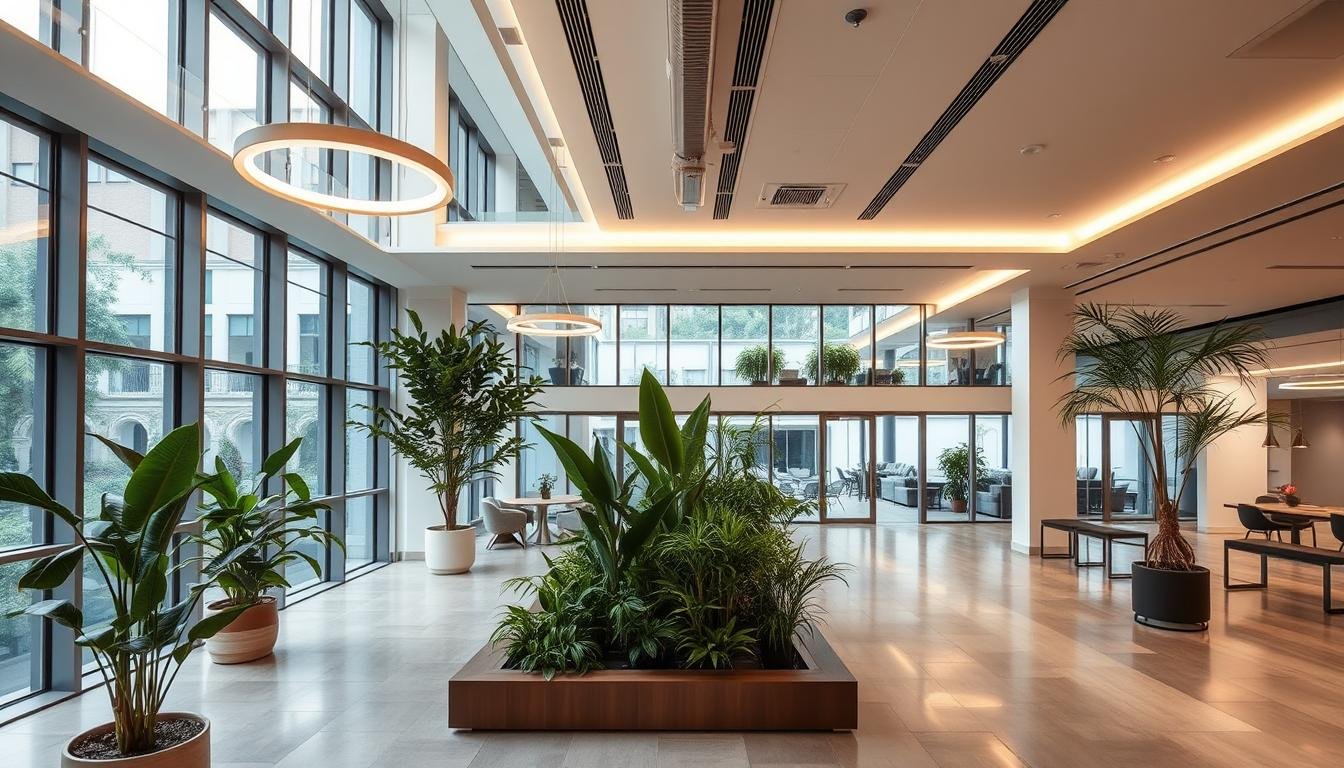
Homeowners can also use smart lighting systems. These systems use sensors to adjust lights based on the natural light in a room. This saves energy and makes rooms look better. By using these strategies, homes can be both energy-efficient and cozy.
Task lighting and dimmers are also good for saving energy. Task lighting shines only where needed, and dimmers adjust brightness. These features help cut down energy use and costs. They make homes more eco-friendly and stylish.
Energy-Efficient Home Decor Trends in Singapore
Singapore is seeing a big rise in energy-efficient home decor trends. This is thanks to the growing love for sustainable materials and designs. Items like furniture made from reclaimed wood and paints with low VOCs are getting more popular.
Home accessories made from eco-friendly materials like bamboo and cork are also gaining traction. They are loved for their beauty and sustainability.
Recent stats show the market for sustainable home products, including decor, grew by about 8% yearly in Singapore from 2018 to 2023. Around 70% of Singaporeans are ready to spend more on eco-friendly and energy-efficient decor. This demand is pushing for more sustainable furniture and accessories.
Adding natural elements, like indoor plants and vertical gardens, can also make homes healthier and use less energy.

The move towards energy-efficient home design is being pushed by government efforts and rules that focus on sustainability. Homeowners are choosing energy-saving appliances, LED lights, and smart home tech to cut down on energy use.
Using furniture and materials from local sources can also help reduce carbon emissions from transport. It supports local economies too. With Singapore aiming for net-zero emissions by 2050, the trend towards energy-efficient decor is set to keep growing. This will help create a greener future for the country.
Sustainable Material Selection for Interior Design
Choosing sustainable materials is key in interior design to lessen environmental harm. Eco-friendly options like bamboo and recycled glass are gaining popularity. Bamboo grows fast and is renewable, perfect for design.
Recycled glass, from old containers, is another green choice. It’s used in countertops and decor pieces. This cuts down on waste and supports recycling, making your space unique and green.
Using green materials helps the planet too. Reclaimed wood saves trees and cuts down pollution. Natural stones, like cork, are strong and can be recycled, ideal for decor.
Opting for sustainable materials makes your space beautiful and eco-friendly. It lowers your carbon footprint and improves your living space. Whether updating your home or office, green materials show your style and care for the planet.
Climate-Responsive Design Elements for Singapore Homes
In Singapore, making your home energy-efficient is key. This means using natural light and shade to cut down on energy use. It also helps keep the air inside clean and fresh.
Choosing the right furniture can make your home both stylish and green. This way, you can enjoy a cozy, eco-friendly space that reflects your taste.
Building homes that are good for the planet is becoming more common in Singapore. Architects are using materials like recycled wood and concrete that don’t harm the environment. They also add features like solar panels to save energy.
Windows and skylights are placed carefully to let in lots of natural light. This means you use less artificial light, which saves energy.
Living walls and green roofs add beauty and help the environment. They also keep your home cool naturally. Renovating old homes is also gaining popularity.
This approach saves resources and reduces waste. Many homeowners prefer to update their homes instead of tearing them down. This way, they make the most of their space and create unique, functional areas.
Smart Home Integration for Energy Management
Smart home integration is key for managing energy in Singapore. It helps homeowners use less energy and be more efficient. For example, smart thermostats can cut energy use by up to 30% in homes. They do this by learning and adjusting to daily routines.
Decorating with smart home tech is easy and effective. Smart plugs can cut energy waste by 75% by controlling appliances remotely. Smart lights adjust to daylight or when someone’s around, saving energy. Accessories like smart locks and video doorbells add to home security and energy management.
Studies show homes with IoT devices save 10-15% on energy costs each year. This makes smart home tech a smart investment. In fact, 85% of homeowners want to add smart features for energy savings. Smart homes not only save energy but also increase property value.
In Singapore, energy-efficient homes are worth 15% more than others. The global smart home market is set to hit $174 billion by 2024. As eco-friendly tech grows, so will options for saving energy and decorating. Smart homes offer a sustainable, efficient living space that’s good for the planet and life quality.
Cost-Benefit Analysis of Energy-Efficient Design
Energy-efficient design is key to saving money. It’s important for homeowners and developers to see the benefits. This design can save a lot on costs and boost property value.
The Building and Construction Authority (BCA) says energy-efficient design saves money. It can cut energy costs by 30% to 50%. Using advanced framing can also save up to 20% on lumber and improve energy use.
Cool roofs can lower rooftop temperatures by up to 50°F. This is a smart decorating idea. Passive solar design can also save 20% to 50% on heating costs. Adding renewable energy systems can save even more.
In summary, understanding the cost-benefit of energy-efficient design is vital. It helps in reducing energy use, lowering costs, and increasing property value. By using these design principles, you can make your home more efficient and valuable.
Shaping the Future of Sustainable Living in Singapore
Singapore is moving towards a greener future in home design. Brand New Land and other developers focus on energy-efficient homes. They use natural light, ventilation, and green spaces to set new eco-friendly standards.
The world is turning to sustainable living, and Singapore is leading the way. Buildings are designed to use less energy and improve air quality. They also use recycled materials and simple designs to reduce waste and clutter.
The Go Green SG 2024 festival and the PARKROYAL COLLECTION Marina Bay hotel show Singapore’s dedication to green living. These projects combine eco-friendly features with modern design. Singapore is showing the world how to live sustainably in the city.