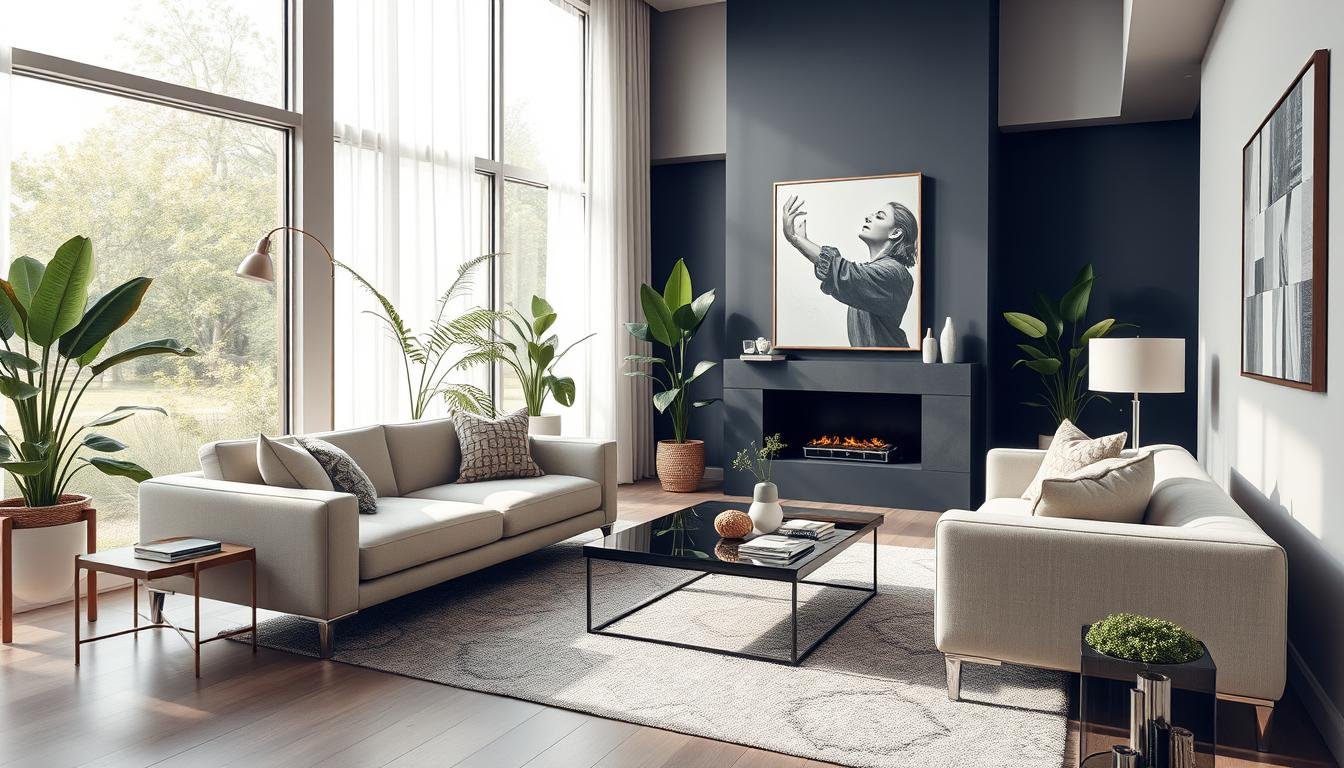
In Singapore, the move to hybrid work has changed how we use our homes. This shift has brought more flexibility and remote work, making people happier with their work-life balance. Now, there’s a big need for home decor that fits both work and personal life. It’s about making homes comfortable and productive with the right interior design and furniture.
Home decor is now about more than looks; it’s about making spaces that help us work well and feel good. Interior design plays a big role in blending work and personal life smoothly. By using furniture that moves, power chargers, and flexible designs, we can make our workspaces better. This way, we can create a work area that fits our personal needs.
Key Takeaways
- Hybrid work models are redefining residential spaces in Singapore, with a focus on adaptability and functionality.
- Increased flexibility and remote work options have led to heightened employee satisfaction regarding work-life balance.
- Home decor solutions should prioritize interior design and furniture that supports productivity and comfort.
- Personalized work environments can be created through flexible design elements and movable furniture.
- Technology integration is key in linking digital and physical work experiences in hybrid work models.
- Employee surveys show different needs across teams and individuals, highlighting the need for ongoing feedback and tailored solutions.
- Companies struggle to ensure fairness between remote and in-office workers, focusing on keeping company culture and attracting talent.
Understanding the Hybrid Work Revolution in Singapore
Singapore is seeing a big change towards hybrid work models. Many companies are now using flexible work setups to boost productivity and make employees happier. This change is because people want more freedom, flexibility, and a better work-life balance.
Homes are now being used as workspaces, thanks to home accessories and wall art. These items help make homes into great places to work.
Studies show that hybrid work is becoming the standard in Singapore. Many companies are moving to this model. But, there are challenges like managing teams over long distances and different time zones. This can make communication and teamwork harder.
To overcome these issues, leaders need to be ready for the future. They must focus on building trust, being open, and finding ways to communicate well.
The use of wall art and home accessories is key in making a calm and productive work area. By choosing the right items, people can feel less stressed and be healthier. As hybrid work keeps changing, it’s vital to put employee well-being first. We need to find a balance between work and life.
With hybrid work on the rise, companies must change how they track performance. They should focus on results that show how engaged and growing employees are. By doing this, businesses can create a culture of learning, innovation, and teamwork. This will help them succeed in today’s work world.
Essential Home Decor Elements for the Modern Hybrid Space
Creating a space that works for both work and personal life is key. Using furniture that can change its use and smart tech can make your space better. For example, modular furniture that can be a desk or a couch makes your space more efficient.
Most of us spend a lot of time inside, so our indoor spaces matter a lot. Natural light is important for our health and mood. Adding plants and light colors can make your space feel calm and bright.
Spaces that can change are important for working together and feeling comfortable. With the climate crisis, we need spaces that are good for the planet. Using materials that are good for the environment can help reduce waste and make your space better for the planet.
Choosing decor that’s good for the planet and works well can make your space great for both work and play. Adding things like a minimalist throw, a smart lamp, or a catch-all tray can make your space look good and feel good. These items support local artists and help the environment.
Maximizing Small Spaces in Singapore Apartments
Singapore’s small apartments need creative solutions to make the most of space. HDB flats range from 36 sq m to 90 sq m, and shoebox condos from 50 sq m to 70 sq m. Using light colors can make rooms seem 20% bigger by reflecting light.
Choosing the right furniture is key. Sofa beds and storage ottomans save up to 30% of space. Floating shelves can add up to 50% more storage, keeping things tidy. Under-bed storage, like platform beds, also maximizes space in small apartments.
Open-concept designs may lose privacy but add to the social area. Furniture with exposed legs makes rooms look lighter, making them seem bigger. Mirrors reflect light, making rooms brighter and larger. By using these strategies, you can make your small Singapore apartment feel spacious and cozy.
Creating the Perfect Home Office Setup
Interior design is key in making a home office productive and comfortable. With more people working from home, investing in good furniture is important. Experts say a comfy chair and a big desk are must-haves to avoid injuries and feel good.
A great home office needs good lighting, few distractions, and plants. Choosing the right furniture is critical. For example, the Branch Ergonomic Chair Pro costs $499, and the Herman Miller Embody chair comes with a 12-year warranty. These chairs offer great comfort and support.
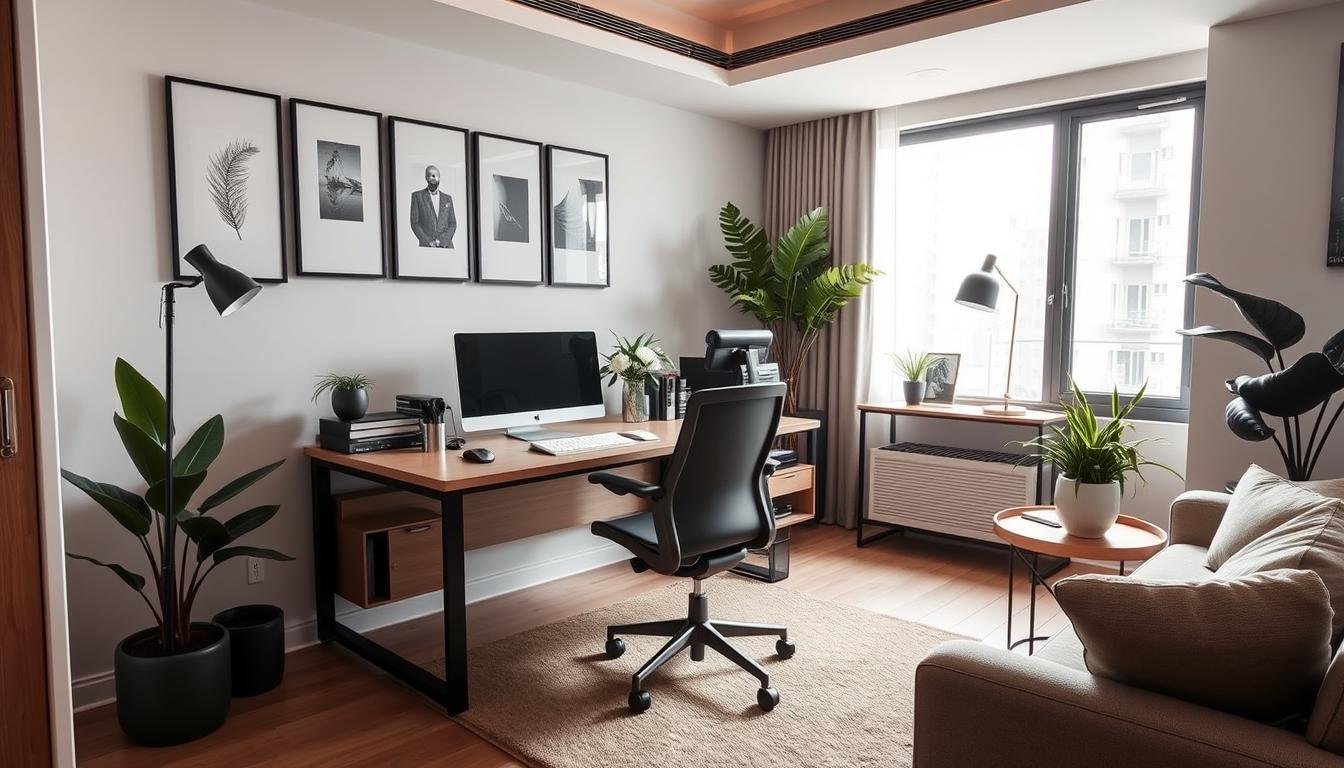
Color schemes, textures, and patterns also matter in a home office. A well-thought-out design can make the space both useful and lovely. By picking quality furniture and designing the space carefully, you can make a home office that boosts your productivity and happiness.
Lighting Strategies for Dual-Purpose Spaces
Getting the right light in dual-purpose spaces is key. In Singapore, many people use their living rooms for both relaxing and working. About 30% of homeowners say they need adjustable lighting for these different activities.
Using lighting as part of your decor can really change a room’s feel. Good ambient lighting can make a room look up to 20% bigger. Task lighting, which is used in 35% of homes, is also important. Pendant lights and other fixtures help use ceiling space well and make a room feel cozy.
Layered lighting is a favorite because it cuts down shadows and glares by 40%. Smart lighting, used by 65% of Singaporeans, lets you control light with your phone. By mixing light sources and choosing energy-saving options, you can make a space that works well for both work and play.
Technology Integration in Modern Home Decor
In Singapore, homes are changing to meet the needs of hybrid work. They now blend technology and design seamlessly. Home projects often include smart devices and tech furniture for better comfort and productivity.
More than 60% of homes use voice-activated assistants like Amazon Alexa or Google Home. These tools are key in modern decor.
Smart tech in living rooms shows a focus on saving energy and resources. Automated lights and climate control can cut energy use by 20%. Smart thermostats can also lower energy bills by 10-15% each year.
About 40% of homeowners in Singapore want more smart tech in their homes. They value the convenience and personal touch it brings.

There’s a growing interest in smart home systems with multi-room audio. By 2024, over 50% of tech-savvy homes will use these features. Adding tech and eco-friendly materials to homes can increase property values by 25% in cities like Singapore.
Home styling now focuses on smart devices and green materials. This creates efficient, stylish, and convenient living spaces.
Balancing Professional and Personal Spaces
The lines between work and personal life are getting blurry. It’s key to find a balance between these areas. This can be done with careful room decor and interior design. Experts say setting clear boundaries and using shared spaces wisely is important.
In Singapore, remote work is becoming more common. Having a dedicated home office is now vital. Interior designers recommend using room dividers, bookshelves, or sliding panels to separate work and living areas. This helps with privacy and design.
Designing a home office means focusing on ergonomics. This includes desks at the right height, comfy chairs, and good lighting. Standing desks are also popular for better posture and less sitting.
To balance work and personal life, thoughtful interior design is needed. By focusing on room decor and design, you can make a space that works for both. As more people work from home, having a well-designed office is key for productivity and happiness.
Sustainable and Wellness-Focused Design Elements
Designing a home with sustainable and wellness elements is key. Using eco-friendly materials like bamboo or recycled items helps keep the air clean. The International Well Building Standard says everyone should live their best life. This includes features like big windows, high ceilings, and lots of natural light.
Adding plants to your decor also makes your home healthier. Plants like peace lilies and snake plants clean the air. They can help you sleep better and feel happier. Plus, using water-saving fixtures and smart lighting can boost your well-being.
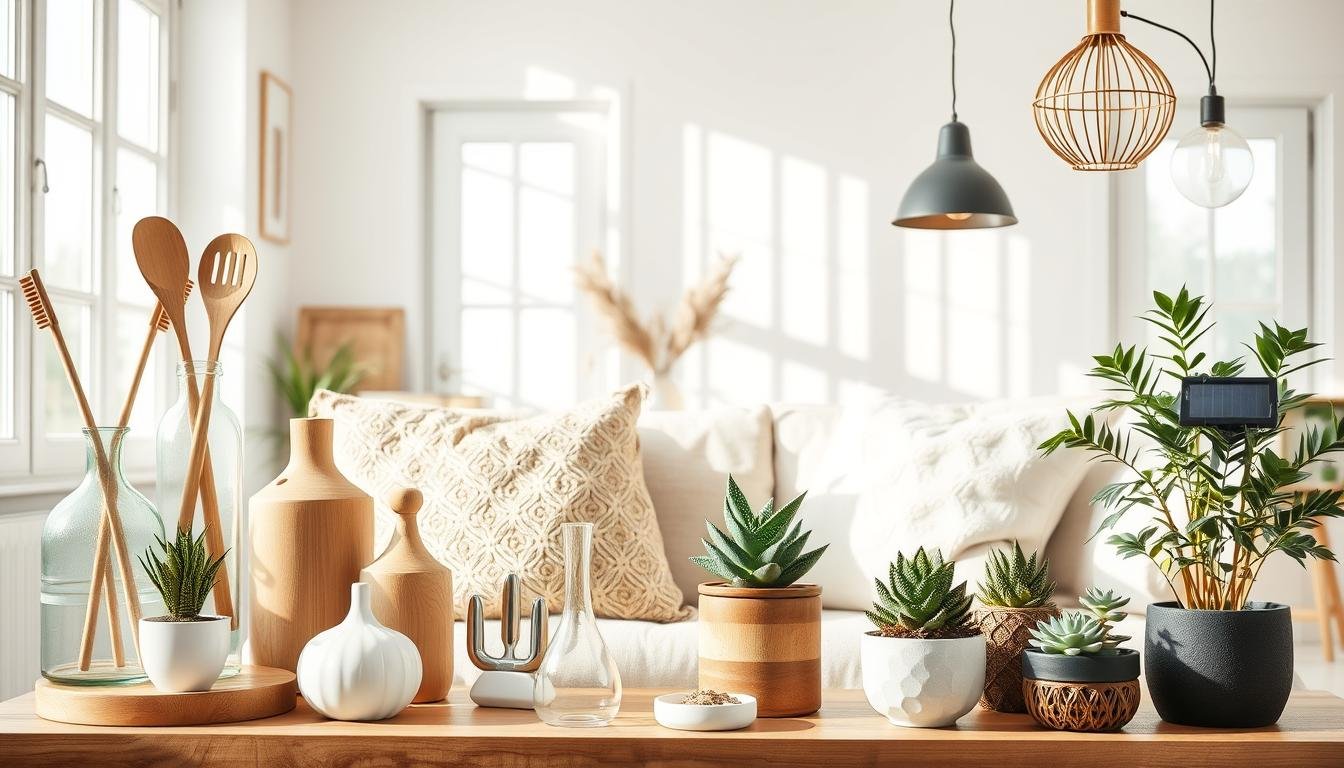
Good sound quality is also important for wellness. Materials like Thermowood help reduce noise. By focusing on these elements, you can make a home that’s good for your body and mind. This includes using natural materials, lots of light, and spaces for exercise and mindfulness.
By choosing sustainable and wellness-focused design, you can make a healthier home. This means using green materials, adding plants, and making sure there’s plenty of natural light. As wellness design becomes more popular, remember to put your health first when decorating your home.
Cultural Influences in Singapore Home Decor
Singapore’s home decor is shaped by its multicultural heritage. About 90% of its design is influenced by Chinese, Malay, and Indian cultures. This mix is seen in decorating ideas, like Peranakan tiles with over 200 designs, blending Chinese and Malay styles.
Home improvement in Singapore often follows Feng Shui. This approach guides 75% of design choices, including furniture and colors. Traditional colonial architecture, with 40% vintage elements, adds a unique touch to modern homes.
Modern minimalism in Singapore uses 30% local motifs and materials. Indian designs, like vibrant silk and wooden furniture, are found in 25% of homes. These elements add warmth and luxury. By embracing these influences, homeowners create spaces that reflect Singapore’s diverse culture.
Budget-Friendly Home Decor Ideas for Hybrid Spaces
Creating a stylish and functional hybrid space doesn’t have to cost a lot. With a bit of creativity, you can achieve your home styling goals without spending too much. About 80% of Singaporeans work from home sometimes, showing the need for both efficiency and comfort in room decor.
One way to save money is to reuse items you already have. For example, an old dresser can become a desk, or a vintage ladder can hold books. This not only saves money but also adds a personal touch. You can also find great deals on second-hand furniture or online.
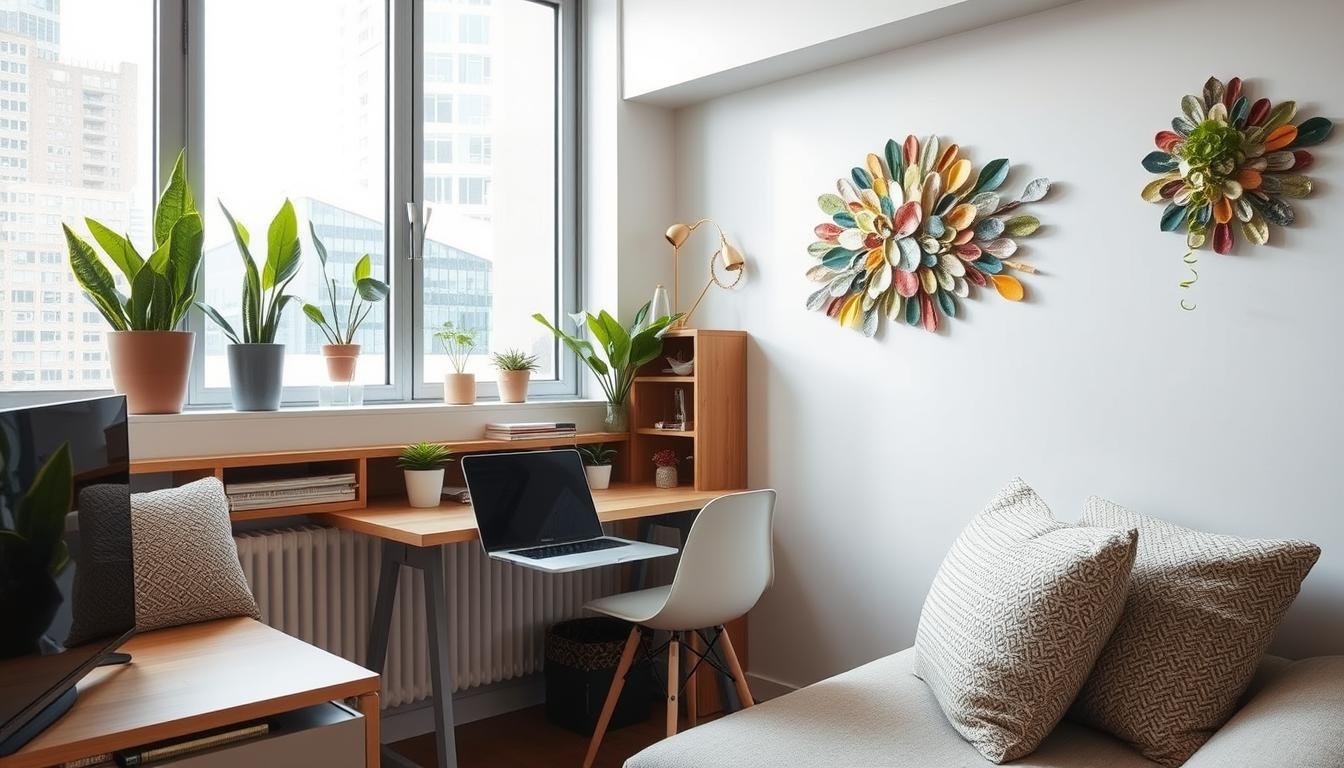
DIY projects are another smart choice. There are many tutorials online that can help you make your own decorative items. You can make throw pillows or wall art to match your home styling. Plus, buying furniture that does more than one thing can save space and make your hybrid space more efficient.
By using these budget-friendly ideas, you can make a beautiful and useful hybrid space. Whether it’s reusing items, finding second-hand furniture, or doing DIY projects, there are many ways to decorate affordably. This way, you can create a space that shows off your personality and style.
Embracing the Future of Home Design in Singapore
The way we work is changing, and so is our homes. Interior design and home decor are getting a fresh look. They now focus on being useful, green, and tailored to each person’s taste.
Going green is big, with more eco-friendly stuff around. People want unique, hand-made items that show off their style. The Japandi style, mixing Japanese simplicity with Scandinavian warmth, is also on the rise. Adding natural touches to homes is becoming popular for better health.
Now, we’re seeing a mix of bold and simple styles. Homeowners are choosing vibrant colors, detailed patterns, and standout furniture. Adding smart tech makes these spaces even more convenient, merging work and life smoothly.
In Singapore, homeowners are making their homes flexible and personal. The future of home design is all about creating spaces that are green, unique, and tech-savvy. It’s an exciting time to make homes that truly reflect who we are.