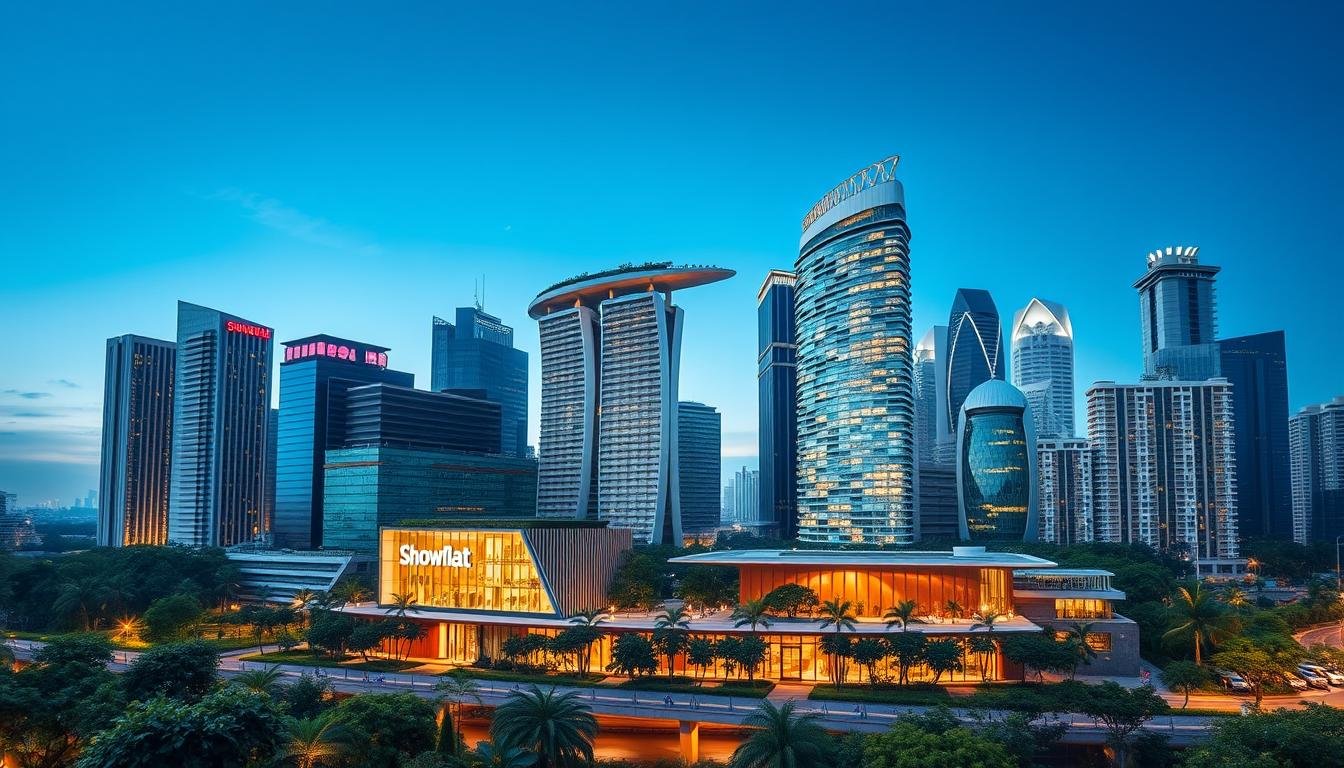
Singapore’s property market in 2025 is facing a lot of changes. These changes come from both local and global economic factors. The market is affected by things like global monetary policy, inflation, and the economy getting back on track.
Singapore’s economy is getting stronger after the pandemic. This is thanks to strong local demand and the return of foreign investment. The housing market, both public and private, is feeling these economic changes. Buyers and sellers need to watch out for both risks and chances in this changing world.
Key Takeaways
- Singapore’s property market is adapting to shifts in the global and local economy, including factors like interest rates, inflation, and foreign investment.
- Suburban living is gaining appeal, with areas like Rest of Central Region (RCR) and Outside Central Region (OCR) seeing increased demand for affordable condos and family-friendly communities.
- Sustainability is a key focus, with more properties being built using eco-friendly materials and technologies.
- The rental market is expected to remain strong, driven by growing demand from the expatriate community and international students.
- The Core Central Region offers competitive pricing and luxury property opportunities, despite new cooling measures in place.
Overview of the Singapore Property Market in 2025
Singapore’s property market is set to grow in 2025. This growth is thanks to the country’s strong economy. The GDP is expected to hit US$548.15 billion by 2025, up 19% from the last four years.
The manufacturing sector will keep growing, with a 1.48% annual increase from 2024 to 2029. This makes Singapore a top spot for businesses and investments.
Several trends are shaping the market. There’s a big demand for homes near MRT stations. There are also more flexible home financing options and a comeback of mixed-use developments. The Core Central Region is seeing new opportunities too.
The Housing and Development Board (HDB) is working to keep housing affordable. They plan to introduce new schemes and grants for first-time buyers and young families.
Property prices in Singapore have leveled off. The average rent for a two-bedroom condo in prime District 9 is SGD 4,000 to SGD 7,000 monthly. Rental yields range from 2.5% to 3.5% annually, with central areas having lower yields.
Prices per square meter in prime areas can go over SGD 20,000. In suburban areas, they range from SGD 10,000 to SGD 15,000.
The market in Singapore is attracting both local and foreign investors. They’re drawn by the country’s strong economy and stable politics. With a 4.5% growth rate in 2025, there are many opportunities for investors looking for long-term gains.
Impact of Global Economic Changes on Singapore
The Singapore property market is closely tied to the country’s economy. This economy is driven by exports and has shown strength despite global changes. International trade and manufacturing have bounced back, boosting Singapore’s exports in services.
Foreign Direct Investment (FDI) in Singapore hit a record US$151 billion in 2023. The US, Netherlands, Mainland China, Japan, and Hong Kong were the top contributors. This investment surge has greatly influenced the demand for properties in Singapore.
Geopolitical shifts, like the rise of BRICS and Asia-Pacific agreements, have also played a role. These changes have made Singapore a key player in international trade, especially with China. They have a big impact on property demand and investment trends in Singapore, offering both challenges and opportunities.
Sustainability Initiatives in Property Development
Singapore’s property market is moving towards sustainability. This shows the country’s dedication to green development. More buyers want eco-friendly Singapore condos and properties.
These properties have energy-saving features and follow green building standards. To meet this need, developers are using sustainable practices in their projects. They are making investments that also help the environment.
The Building and Construction Authority’s (BCA) Green Mark Certification Program is key. It makes new buildings and major retrofits more energy-efficient. The latest Green Mark 2021 standard pushes for buildings to have zero carbon emissions.
The Green Building Master Plan (SGBMP) and the Super Low-Energy (SLE) Building Program are also important. They aim for buildings to use no energy at all. There are rewards for making old buildings more energy-efficient and for building new ones that use very little energy.
Regulations like the Sustainable Development Code (SDC) encourage projects to be more eco-friendly. They promote green spaces, biodiversity, and sustainable transport options.
As the industry adopts these green measures, developers are changing their ways. They focus on using sustainable materials, energy-saving systems, and water conservation. This helps Singapore reach its sustainability goals and stand out in green real estate.
Residential Property Trends
The Singapore property market is changing fast. More buyers want homes and condos near MRT stations. This shows a shift towards a car-free, urban lifestyle. New “Plus” model HDB flats, with special features, are also getting a lot of interest.
In the Core Central Region (CCR), luxury condos have seen a 4.43% price rise in Q1 2024. This shows demand for top-notch properties is still strong. But, the rental market is cooling down, with prices expected to drop.
Co-living spaces are becoming more popular. They appeal to young professionals and expats, offering flexibility and community. These trends are changing the Singapore property scene, meeting the needs of buyers and renters.

Even though prices might slow down in 2024, the market is expected to stay strong. The DBS Research team predicts this. But, buyers and investors need to be careful with their money to make smart investments in Singapore.
Commercial Real Estate Adjustments
Singapore’s property market is changing, and commercial real estate is adapting. With more people working from home, there’s a big demand for new office spaces. These spaces need to support both in-office and remote work.
Mixed-use developments, like the Fortune Centre in Bras Basah Bugis, are becoming popular. They combine commercial, cultural, and educational activities. This mix attracts investors because of the potential for higher rental income and strategic locations.
The retail sector is also changing. Orchard Road, Singapore’s top shopping area, is among the world’s most expensive. Yet, retail sales dropped by 2% by October 2023. Food and alcohol sales, however, rose by 12.2%.
This change in shopping habits has made owners rethink their tenant mixes. They aim to keep their spaces filled and profitable.
The industrial property market in Singapore is growing fast. Rent and prices have gone up since late 2020. This trend is likely to keep going, with more industrial space expected in 2024.
More industrial space will be added, from 800,000 square meters in 2023 to 1.4 to 1.6 million square meters. The demand for industrial properties is high. This is due to a comeback in manufacturing and supply chain issues, offering chances for investors.
Government Policies Affecting the Market
The Singapore government is key in shaping the real estate market. They use policies to keep prices stable and homes affordable. Recently, they raised the Additional Buyer’s Stamp Duty (ABSD) rates. This change has made the Core Central Region less appealing to foreign buyers.
The Urban Redevelopment Authority leads in planning the market’s growth. For example, they increased the ABSD for foreign buyers to 60% in April 2023. This move aims to reduce speculative buying and boost local demand.
To help with affordability and income equality, the government has introduced progressive property taxes. These taxes are higher on investment and luxury homes. They also offer grants like the Enhanced CPF Housing Grant and Proximity Housing Grant. These help first-time buyers and those upgrading their homes.
In the future, sustainability and green building will influence the market. So will policies for senior housing and smart technology in buildings. These efforts are designed to keep the market stable and strong for years to come.
Technological Advancements in Property Transactions
The Singapore real estate market is entering a new era with technology. It’s changing how properties are marketed, bought, and sold. This includes tokenizing real estate and using geospatial technologies.
In 2025, digital real estate platforms like Midview City were tokenized, raising over $600,000. This is thanks to blockchain real estate firms like Fraxtor, which got licenses from the Monetary Authority of Singapore (MAS). To invest, you need at least $2 million in assets or an annual income of $300,000.
The Singapore government and industry are working to make property transactions clearer and faster. The Alliance for Action on Accurate Property Listings is tackling issues like unauthorized listings. The Real Estate ITM version 1.0 also led to the Digitalised Property Transactions Workgroup, aiming to improve the process.
To help real estate agents, the SMEs Go Digital programme and the Chief Technology Officer-as-a-Service initiative offer digital solutions and advice. The Continuing Professional Development (CPD) framework also keeps agents updated with policy changes and digital skills.
Geospatial technologies are also becoming key, thanks to a partnership between the Singapore Land Authority (SLA) and the Real Estate Developers’ Association of Singapore (REDAS). This partnership aims to boost efficiency and service delivery in real estate development.
These technological changes are reshaping the Singapore property market. They’re making it easier for Singapore Property Agents and consumers to make smart choices.

Rental Market Dynamics
Singapore’s property market is changing with the economy. The rental market is also shifting. Mixed-use developments are attracting more tenants with their great locations and amenities.
Industry data shows private rental prices might drop by 5% in 2024. This is because more new units are coming online. Landlords who saw big rent increases until mid-2023 are now facing a change.
Location, type of property, and market conditions affect rental rates in 2025. The vacancy rate for private homes in Singapore fell to 6.1% in Q2 2024. This shows demand is softening.
The rental market in Singapore is adapting to economic changes. This brings both challenges and opportunities for investors and tenants.
Property Financing Options
The Singapore property market is changing, and so are the financing options. Floating rate home loans are becoming more popular. This is because interest rates are expected to drop in 2024-2025. Major banks in Singapore are offering competitive rates, making refinancing a good choice for property owners.
Interest rates have a big impact on buying property. Buyers watch rate changes closely to make smart choices. It’s important to know about different mortgage types, like fixed-rate, board-rate, and SORA-based loans. Experts say working with mortgage consultants can help find the best financing options.
Fixed-rate mortgages in Singapore have rates about 3.9% higher than floating-rate loans. But, they offer stability for a set time. Floating-rate loans, like those tied to SORA, are gaining popularity because they are less volatile than SIBOR and SOR.
Homeowners in Singapore often look at refinancing every 2-3 years. This is when the lock-in period ends. They look for better financing costs to save money.
Challenges Facing the Property Market
The Singapore property market is facing many challenges in 2025. With only 728.3 square kilometers of land, finding space is hard. This leads to higher prices. Economic growth, population changes, and investment mood also play big roles in supply and demand.
There’s worry about too many new units in 2024. Over 8,000 to 11,000 units are set to be launched. Global economic issues like inflation and supply chain problems might affect buyers’ moods and the market.
Property agents need to be quick to keep up. They must use technology and good communication to meet client needs and close deals.
Government rules, like stamp duties and loan limits, try to stop property price bubbles. These rules have cut down on sales but helped prices grow at a steady 3-5% in 2024. Property pros must navigate these rules while finding market chances.
Despite the hurdles, the Singapore property market is strong. The city’s economic growth, smart planning, and good locations keep demand high. As the market changes, property experts must use data to make smart choices and keep the market alive.
Future Outlook for Singapore Property
The future of Singapore’s property market looks cautiously optimistic. The country is adapting to new economic changes. Trends like more demand for properties near MRT stations and growth in mixed-use developments are expected.
Stabilization in Singapore property prices is also on the horizon. For long-term investment, location, sustainability, and potential for growth are key. The Core Central Region (CCR) is seen as a hotspot for luxury property gains.
Experts predict the market will hit USD 64.04 billion by 2029, growing 9% annually from 2024 to 2029. This growth is fueled by Singapore’s strong economy and rising demand from both locals and international buyers. Sustainable development will also play a big role.
Singapore’s status as a global financial hub and a top choice for the wealthy will boost the real estate sector. With a 28.1% increase in wealthy individuals worldwide by 2028, demand for premium properties in Singapore will stay strong.
Conclusion
The Singapore property market in 2025 shows great strength despite economic changes. It adapts to new trends, technology, and government policies. Even with economic uncertainty and possible oversupply, the market stays strong.
Many Singaporeans own their homes, mostly in HDB flats. People prefer smaller homes due to social and economic changes. Singapore’s solid economy, smart planning, and appeal to investors keep the market positive.
The Singapore Property and Singapore Real Estate markets keep growing. The Singapore Housing Market is ready to face challenges and attract investors. With new ideas, green efforts, and tech, Singapore’s property scene is set for more growth.