Singapore’s property market is changing fast, with transportation hubs playing a big role. MRT stations, for example, have made nearby properties more valuable. This is because people want to live close to where they can easily get around.
This trend is set to keep growing. By 2025, the market is expected to see big changes. This will be thanks to more infrastructure and the growth of transportation hubs.
There’s a big demand for homes near MRT stations. In 2024, about 2,968 new homes will be launched in the Core Central Region. This is because living near transportation hubs is very convenient.
As Singapore focuses on sustainable homes, the role of transportation hubs will grow. By 2030, 80% of buildings aim to be ‘green’. This shows how important transportation hubs will be for the market.
It’s clear that transportation projects boost property prices. The government wants to make Singapore greener and reduce waste. This will make transportation hubs even more vital for the market.
Key Takeaways
- Transportation hubs, such as MRT stations, are increasing property values in Singapore’s Property Market.
- Properties near transportation hubs are in high demand due to commuting convenience, driven by Infrastructure Development.
- The Singapore property market is projected for significant changes by 2025, driven by the growth of Transportation Hubs and Infrastructure Development.
- Singapore’s landed home design is moving towards sustainability, with an aim for 80% of buildings to be ‘green’ by 2030, driven by the need for sustainable Transportation Hubs and Infrastructure Development.
- The presence of transportation hubs is a key factor in the Property Market, with the demand for properties near MRT stations expected to continue growing, driven by the need for Infrastructure Development and Transportation Hubs.
- The Singapore government’s aim to increase green spaces and reduce waste will further emphasize the importance of transportation hubs in the Property Market, driven by the need for sustainable Infrastructure Development and Transportation Hubs.
- The growth of single-family offices in Singapore, from 400 in 2020 to 1,400 by the end of 2023, will also contribute to the demand for properties near transportation hubs, driven by the need for Infrastructure Development and Transportation Hubs.
Understanding Singapore’s Integrated Transport-Property Landscape
Singapore’s Urban Planning is key to its property market. Government Policies and urban planning shape the transport infrastructure. This, in turn, impacts the Real Estate market.
The Master Plan guides land use for 10 to 15 years. It balances housing, industry, commerce, recreation, transport, and utilities. This ensures a well-planned city.
The Urban Redevelopment Authority (URA) leads Infrastructure Development in areas like Marina Bay. Site releases and development depend on market demand and investor confidence. Public consultations show the need for more housing and industry while keeping parks.

Effective planning makes urban living vibrant in a dense city. Over 7,400 people shared their views on the Land Transport Master Plan (LTMP) 2040. The LTMP aims to make the city more convenient, reducing travel times.
Impact of MRT Expansion on Property Prices
The MRT Expansion in Singapore has greatly affected Property Prices. Areas near new MRT lines have seen a big jump in property values. For example, the Thomson-East Coast Line (TEL) has led to higher property prices.
Approximately 235,000 households are within a 10-minute walk to a new TEL MRT station. This has caused a 4.8 times year-on-year increase in non-landed private residential listings near the new TEL stations.
In terms of Real Estate, the MRT Expansion has made areas like Tanjong Katong more attractive. Rental listings jumped to 1,844 in Q3 2024, up from just 301 a year prior. The median asking price per square foot (psf) for condominiums within 0.8 km of the new stations has also increased by 6.8% compared to a year ago, reaching S$2,068 in Q3 2024.

The data shows the MRT Expansion has a positive impact on Property Prices. Areas near new MRT lines have seen increased property values. This is evident in the significant increase in non-landed private residential listings and rental listings near the new TEL stations.
As the MRT Expansion continues to shape Singapore’s Real Estate market, it’s important to consider its impact. The impact of transportation hubs on Property Prices and the overall market trends in Singapore is significant.
Key Transportation Developments Shaping Real Estate Trends
Singapore’s real estate market is changing thanks to new MRT lines and bus routes. These updates improve how we get around and affect property trends. The future will bring even more changes, like self-driving cars and smart city plans.
The RTS Link between Johor Bahru and Singapore will make the city even more connected. This will likely boost property values. The government aims to make Singapore a smart, green city, impacting the property market big time.
Understanding transportation’s role in real estate is key. It helps investors and buyers make smart choices in the Singapore market. Smart tech and new transport ideas will shape the future of real estate here.
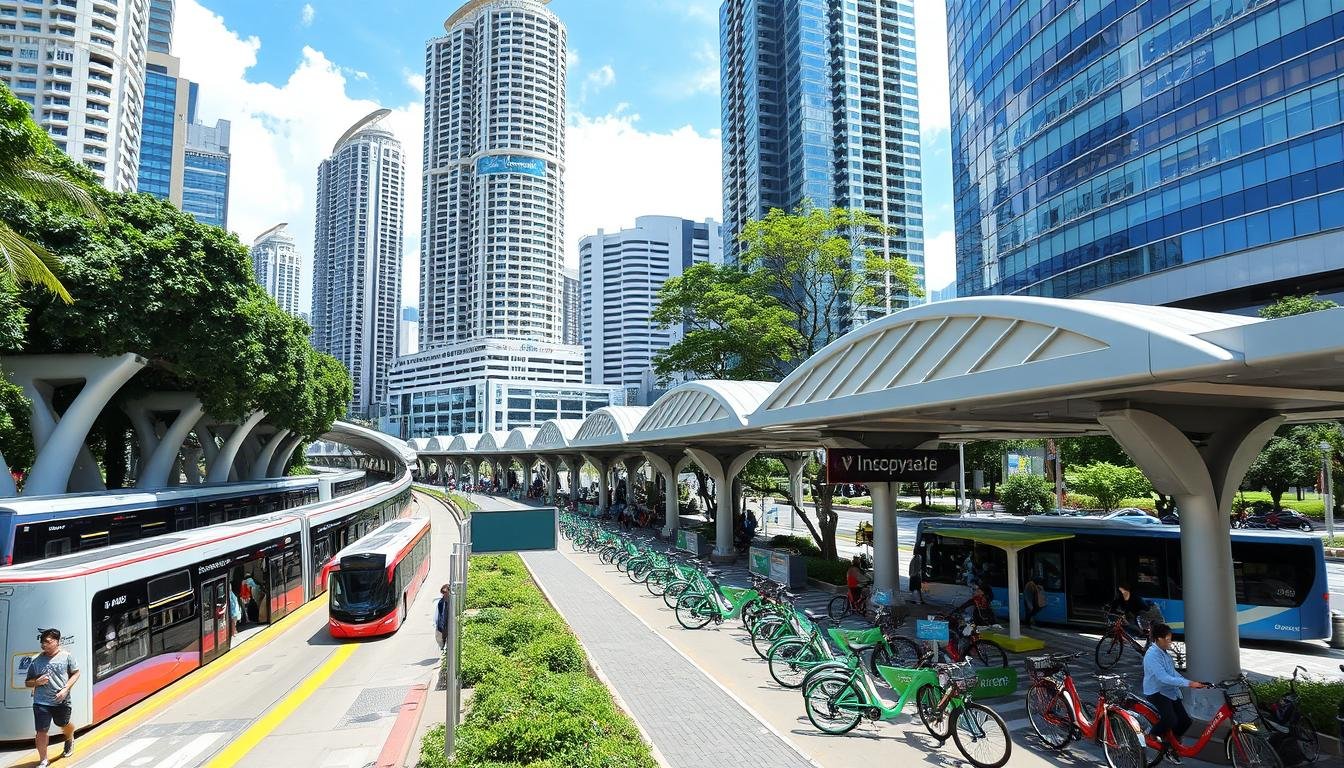
Transportation changes will greatly affect Singapore’s real estate. New projects and plans keep coming. As the city’s infrastructure grows, so will the property market, with transport playing a big part.
Property Price Premiums Near Transport Nodes
Properties near transportation hubs in Singapore often have higher demand and faster value growth. The closeness to transport nodes, like MRT stations, greatly boosts property prices. Research shows that homes within 1 kilometer of MRT stations see a big price jump.
Living near transport hubs offers many benefits, like better access and more amenities. This is why homes near transport nodes are more expensive. For example, homes near MRT interchanges can cost up to 4% more.
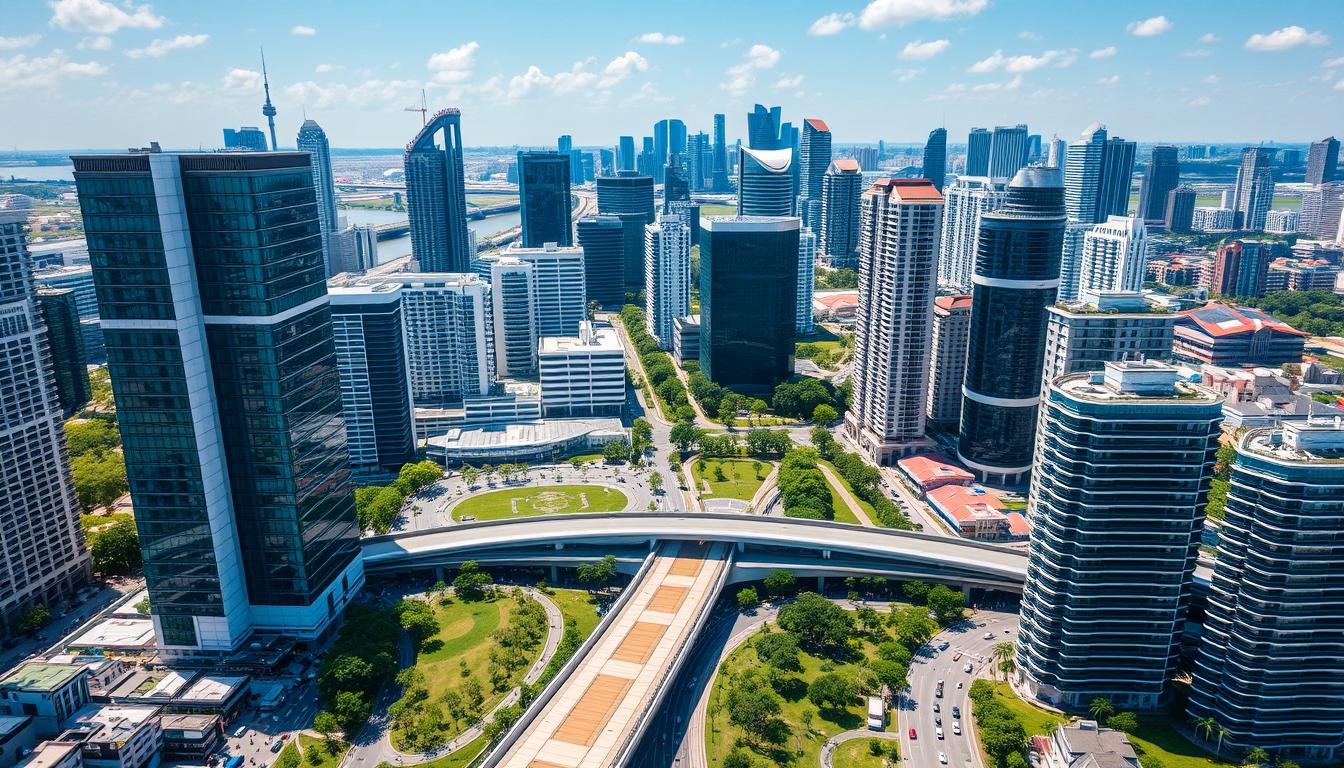
The link between property values and accessibility is clear. In Singapore, the Land Transport Authority plans to expand the rail network. This will likely make homes near new transport nodes more sought after and expensive.
Investment Opportunities in Transport-Adjacent Properties
Singapore’s Real Estate market offers unique Investment Opportunities, mainly in Transport-Adjacent Properties. The city-state’s well-developed transportation network, including its extensive MRT system, makes properties near these hubs highly desirable. Data shows that properties near transportation hubs tend to increase in value over time, attracting investors.
In Singapore, the closeness to transportation nodes greatly affects property values. The launch of new MRT lines and stations can significantly boost housing values in surrounding areas. For example, the Circle Line has increased housing values by 8.6% in areas within 600m of an MRT station. This trend is expected to continue, with upcoming transportation projects likely to increase property values in adjacent areas.
Investors should look at properties in areas with upcoming transportation developments. The Woodlands North Coast, for example, is set to benefit from the upcoming Rapid Transit System (RTS) connecting to Johor Bahru. With its convenient access to the Causeway and the Thomson-East Coast Line, this area presents a compelling Investment Opportunity in Transport-Adjacent Properties. As the Singapore Real Estate market continues to evolve, investors who adapt to these changes can reap significant rewards.
Government Policies and Transport-Oriented Development
In Singapore, government policies are key to driving transport-oriented development. They aim to create sustainable and connected communities. The government has launched various initiatives, like new rail lines and mixed-use developments around transport hubs.
The government’s focus is on building vibrant and sustainable communities. They mix residential, commercial, and recreational spaces. This is supported by the Urban Redevelopment Authority’s (URA) Master Plan. The plan guides Singapore’s urban development, highlighting the need for walkable and bikeable communities.
The government’s dedication to transport-oriented development is seen in its infrastructure investments. They aim to build a complete and integrated transport network. This includes new rail lines, bus routes, and cycling paths. They also focus on making streets and public spaces pedestrian-friendly.
Case Studies of Transport Hub Property Success Stories
Singapore’s Real Estate market has grown a lot thanks to transport hubs. The Paya Lebar Central area is a great example. It’s now a bustling Transport Hub Property. This shows how important good planning, mixed-use development, and community involvement are.
Research shows that well-planned transport hubs boost property values and improve life quality. In Singapore, combining transport hubs with homes and businesses has made communities lively and green. For example, people can now easily use public transport, cutting down on car use and traffic.
Looking at successful transport hub projects in Singapore, we see the value of investing in Real Estate near transport points. These spots offer easy access to public transport and many amenities. This makes them very appealing to both residents and businesses. As Singapore keeps growing, the role of transport hubs in the property market will grow too.
By studying these Case Studies, we learn a lot about what makes Transport Hub Property successful in Singapore. We see how key good planning, mixed-use development, and community involvement are. This helps us understand how transport-oriented projects can change the Real Estate scene and build strong, lasting communities.
Analyzing Future Transport-Property Hotspots
Singapore’s Real Estate market is set to grow a lot. This is because of new trends in transportation. New and bigger transportation hubs will pop up, drawing in investors and buyers.
The Jurong Lake District is on track to become a big economic center. The Jurong Region Line and Cross Island Line will make it easier to get there. This will likely raise property prices and rental demand, making it a good choice for investors.
Other spots like Woodlands Regional Centre and Tampines will also see growth. The Thomson-East Coast Line and North-South Corridor will cut down travel times. This will make these areas more appealing for living and working.
As Singapore keeps changing, it’s key to watch the Real Estate market closely. Look out for areas with new transportation projects. This way, investors and buyers can make smart choices and benefit from these hotspots.
The Road Ahead: Transport Infrastructure’s Long-term Property Impact
Singapore is investing in better transport infrastructure. This will have a big impact on the property market. Experts say many things will affect this, like government policies and new technologies.
Properties near transport hubs have always been more expensive. But, this trend might not last forever. It depends on keeping a balance between how much is built and what people want.
Also, new ways to travel like self-driving cars and small vehicles might change what people want in a home. Developers and investors need to watch these changes. They should find out where the next big property spots will be.