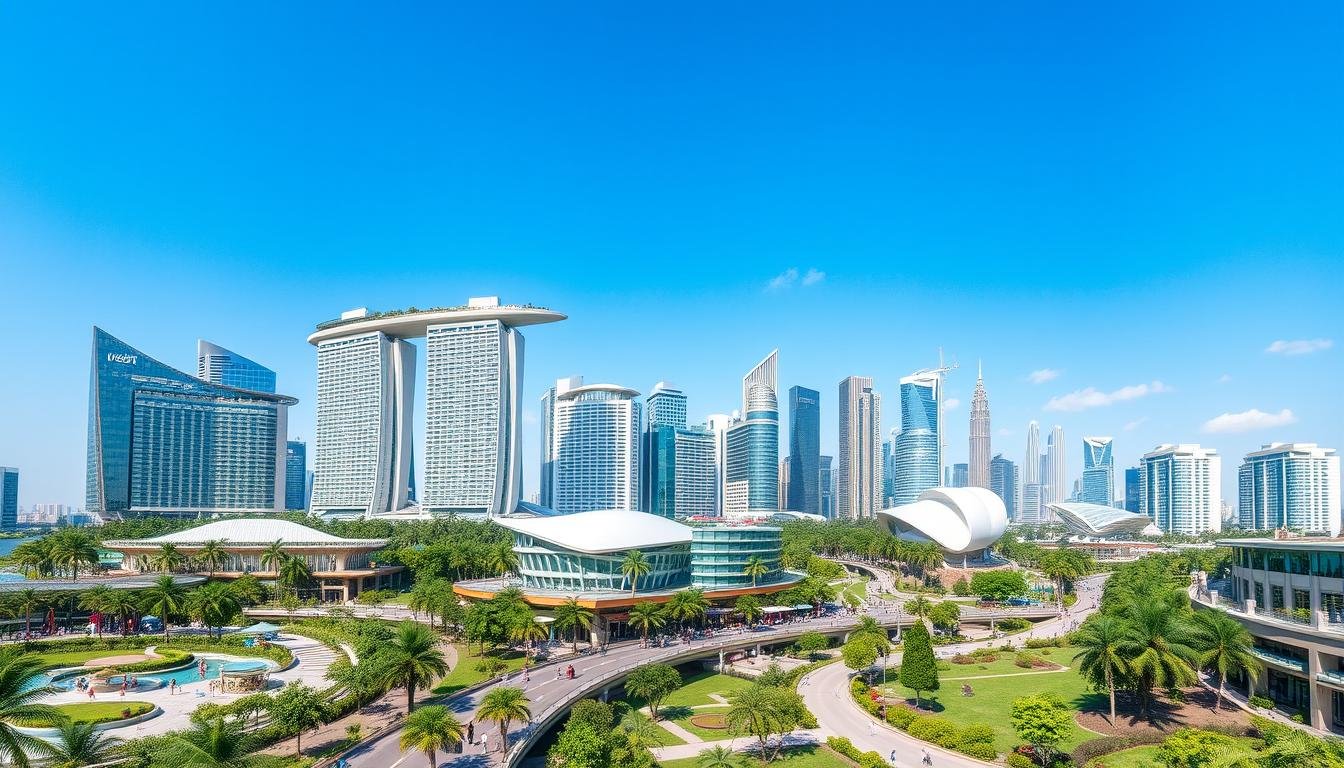
Singapore’s real estate market is strong and appealing. It offers great chances for investors and homebuyers. The city is changing with new projects like the Greater Southern Waterfront (GSW), Tengah, Punggol Digital District, and Jurong Innovation District.
These areas will grow a lot, adding luxury homes and business spaces. This mix will attract many people.
The outlook for 2025 looks good. New projects and changing tastes will boost demand for mixed-use developments. Places like Sengkang, Punggol, and Bishan are getting more popular.
They offer affordable condos, big spaces, and easy access to parks. This is perfect for families and those wanting a good balance between work and life. Also, green and smart homes will become more common in Singapore.
More homes will aim to be eco-friendly and have smart systems for saving energy.
Key Takeaways
- Ongoing urban transformation in key areas like the Greater Southern Waterfront, Tengah, Punggol Digital District, and Jurong Innovation District
- Rising demand for affordable condos and larger living spaces in suburban areas like Sengkang, Punggol, and Bishan
- Increased focus on sustainability and smart home technology in Singapore’s real estate sector
- Stable global interest rates impacting borrowing costs for homebuyers
- Singapore’s continued appeal to foreign investors, particularly in the luxury property market
Understanding Integrated Developments in Singapore Property
Integrated developments in Singapore are gaining popularity. They combine homes, offices, and sometimes factories in one project. These mixed-use areas offer many benefits, like easy access to public transport, shops, and community facilities.
Parktown Residence in Tampines is a great example. It will have 1,193 homes, shops, a community club, a hawker center, and a bus interchange. This mix of living, shopping, and fun spaces can make life better and more convenient for residents.
Integrated developments in Singapore cost more than just homes. They are usually 20 to 25 percent pricier. In 2022, their resale values went up by 16% to 26%. They also get 21% to 62% more rent than other projects in the area.
The charm of these developments is their potential to increase property value and improve life quality. As Singapore’s real estate market grows, these integrated communities will become more vital. They are shaping the future of housing and residential properties in Singapore.
The Growth of Integrated Developments in Recent Years
In recent years, integrated developments have become more popular in Singapore’s real estate. Mixed-use projects, especially in suburban areas, are on the rise. This growth is due to government plans, changes in work-life balance, and the need for convenience among buyers.
Properties like Marina Bay Sands, Orchard Gateway, and One Raffles Place are in high demand. They offer better prices and rental yields than standalone properties. Their diverse tenant base and lively environments make them attractive for investors, providing stable income and long-term contracts.
The Urban Redevelopment Authority (URA) is key in shaping Singapore’s integrated developments. It sets guidelines to use land efficiently and promote mixed-use projects. This strategy has led to successful projects like Pasir Ris 8, which sold 86% of its units in the first week.
Despite challenges like e-commerce’s impact on retail and public transportation advancements, integrated developments remain attractive. Their prime locations, top-notch amenities, and iconic status keep driving demand from investors.
Notable Integrated Developments in Singapore
Singapore’s property market has seen a rise in integrated developments. These offer a full living experience to homebuyers. They often see better growth in value and rental income compared to single-use properties.
Marina One Residences is a key example. It has 1,042 units, with prices starting at $1.8 million. It features 140,000 square feet of retail space. Plus, it has The Pulse, a double-storey event space, and an indoor climbing wall.

The Woodleigh Residences is another standout. It has 667 units, starting at $1 million. It offers 161,640 square feet of retail space. It also has an indoor onsen pool and a 24-hour supermarket.
Sengkang Grand Residences has 680 units, priced from $700,000 to $2 million. It has 160,000 square feet of retail space. It also includes a community club and a civic center for events. Upcoming projects like CanningHill Piers and W Residences Singapore – Marina View will likely follow this trend.
Government Initiatives Supporting Integrated Developments
The Singapore government is pushing for integrated developments in the real estate market. It uses policies and regulations to encourage decentralization and regional centers. Incentives are given for mixed-use projects that have homes, offices, and fun spaces.
The MRT network is growing, making it easier to get to these developments. The government plans to make new areas like the Greater Southern Waterfront even better. This shows its dedication to making Singapore a lively and self-sufficient city.
The Housing & Development Board (HDB) is also working hard. It’s upgrading public housing estates with programs like Remaking Our Heartland (ROH) and the Neighbourhood Renewal Programme (NRP). These efforts improve community spaces and make areas more appealing for new projects.
The government’s support for integrated developments is clear in its urban planning and policies. These efforts are shaping the future of Singapore’s real estate. They offer great opportunities for developers and homebuyers to enjoy the benefits of living in an integrated community.
Economic Impact of Integrated Developments
Singapore’s integrated developments have greatly boosted the country’s economy. These projects offer jobs in retail, hospitality, and more. They also help local businesses grow, making areas more lively and economically active.
The Newport Residences and Marina Gardens Lane are great examples. They are expected to bring big economic gains to their neighborhoods. These developments help Singapore move towards a knowledge-based economy, where skilled workers earn more.
But the benefits don’t stop at jobs and business growth. The Singapore government has started programs to help low-wage workers. Programs like ComCare, Workfare, and the Silver Support Scheme aim to share the economic gains more widely.
As Singapore’s real estate evolves, integrated developments will play a key role. They balance business, resident, and community needs. These projects are essential for Singapore’s future as a vibrant, inclusive, and prosperous city.
Integrated Developments and Sustainability
Sustainability is a big deal in Singapore’s integrated developments. The city-state aims to make homes and offices that are good for the planet. This means following green building rules, using energy wisely, and managing water well.
By 2025, more homes and offices in Singapore will meet high green standards. This is thanks to the BCA Green Mark certification.
Geneo, a $1.37 billion life sciences hub launched in 2023, shows Singapore’s green commitment. It has lots of green space to cool the city and solar panels to make clean energy. It also uses special materials that save carbon.
City Developments Limited (CDL) is a leader in green building. CDL is known for cutting down energy and water use in its projects. By using new tech and green designs, it aims to help the environment and use land better.
The Appeal of Mixed-Use Living Spaces
In Singapore, mixed-use living spaces are becoming more popular. They combine homes with shops and fun activities in one place. This makes life easier, with less travel time and easy access to what you need.
These spaces also create a strong sense of community. People enjoy living in areas where they can easily meet and interact with others.
Recent sales show how much people want these spaces. A two-bedroom condo at Pasir Ris 8 sold for $1.49 million in November 2023. This was a 37% jump from its launch price in 2021. Mixed-use projects in Singapore tend to have higher prices than just homes, showing their value.
Homebuyers love the community feel of these developments. Places like The Orie in Toa Payoh and ELTA in Clementi are designed to make people feel connected. They have shared areas and amenities that encourage people to come together.
This kind of living is becoming more popular. It offers a complete lifestyle where work, play, and rest are all close by. It’s a big part of Singapore’s vision for a sustainable city.
Mixed-use developments are key to Singapore’s urban planning. They help reduce travel time, improve the environment, and make neighborhoods lively. With their unique benefits and potential for good returns, they’re a top choice for investing in Singapore.
Challenges Facing Integrated Developments
The Singapore property market is changing fast. Integrated developments, with homes, shops, and fun spaces, offer both chances and hurdles. These projects need careful planning to meet everyone’s needs.
Developers face many challenges, like dealing with strict rules and higher costs. They must also balance keeping homes quiet and private. This is key to making these areas lively and useful for all.
The market’s ups and downs can also affect these projects. Things like the economy, how people work, and what they want can change. Developers must understand these shifts to make their projects work long-term.
Despite the obstacles, integrated developments are still attractive. In Singapore, where space is limited, people want places that offer everything. By tackling these issues, developers can build communities that meet today’s needs and tomorrow’s.
The Role of Technology in Integrated Developments
Technology is key in shaping Singapore’s real estate future, especially in integrated developments. As Singapore Property and Singapore Real Estate grow, new tech is central. It makes living better and running things more smoothly.
Smart homes with IoT devices and energy-saving systems are just the start. Developers use data and AI to plan cities better, use space wisely, and improve services. This makes life easier and greener.

The future of Singapore’s integrated developments will see more tech. New tools like procedural modeling and AI help in planning and decision-making. This makes development faster and smarter.
Tools like ePlanner and URA SPACE help in planning and managing. The Design & Planning Lab at URA leads in digital planning. They use tech to design better cities.
As demand for integrated developments grows, tech will play a bigger role. It will help create vibrant, green, and community-focused living spaces. These spaces will meet the changing needs of people and cities.
Future Outlook for Integrated Developments in Singapore
The future of integrated developments in Singapore is very promising. These projects aim to change how we live in cities. They offer a mix of homes, work spaces, and fun activities.
Suburban areas will see more growth, meeting the needs of those wanting a calm life. Places like Parktown Residence and Lentor Central Residences will change suburban living. They will have medical services, learning centers, and community areas.
Sustainability will be a big focus. These developments will use green tech and design to reduce harm to the environment. Oasis Terraces in Punggol and Woodleigh Village are examples. They use rainwater and renewable energy.
Mixed-use living spaces will also evolve. They will focus more on health, wellness, and community. These developments will have work spaces, gyms, and places for fun. They aim to build a sense of community and well-being.
The future of integrated developments in Singapore is bright. These projects are changing how we live, work, and thrive. With support from the government and a growing demand, Singapore Homes and Singapore Condos will lead the way.
Conclusion: The Future of Singapore Property and Integrated Developments
Integrated developments are set to be key in the future of Singapore’s housing market. Currently, only about 3% of homes are in these mixed-use projects. Yet, they often have higher rental rates and resale values than other properties.
Singapore aims to make cities better and more community-focused. This means more advanced integrated developments are on the way. Projects like the Cross Island Line in Punggol and Pasir Ris 8 will offer a mix of homes, shops, and fun spots. While there might be traffic issues, the benefits of living in these areas seem to outweigh the drawbacks.
As Singapore moves towards being a better, greener, and more innovative city, integrated developments will be crucial. They can fetch high prices and rents, making them attractive for investors and buyers. The future of Singapore’s property market will likely be shaped by these developments, meeting the changing needs of its people.