The Government Land Sales (GLS) program is key in shaping Singapore’s real estate market. It controls the land released for development. This affects housing supply, prices, and urban planning.
In 2024, 2,968 new homes will be added in the Core Central Region (CCR). The GLS program is vital for a stable housing market.
Properties near MRT stations are sought after for better travel. The GLS program releases land in strategic spots. This meets the demand for convenient living.
The Urban Redevelopment Authority (URA) ensures projects align with Singapore’s goals. This keeps the Property Market competitive and appealing to investors.
The government aims to make 80% of buildings ‘green’ by 2030. This shows the Property Market’s focus on sustainability. With the Smart home appliances market growing, the GLS program must balance sustainability with housing and commercial needs.
Key Takeaways
- The Government Land Sales program regulates land supply and demand in Singapore’s Property Market.
- The program influences housing supply, pricing trends, and urban planning in Singapore.
- Properties near MRT stations are in high demand due to improved commuting convenience.
- The Urban Redevelopment Authority (URA) oversees projects to align with Singapore’s growth and sustainability goals.
- The Singapore government plans to make 80% of buildings ‘green’ by 2030, stressing sustainability in the Property Market.
- The GLS program must balance sustainable development with housing and commercial space demand.
Understanding Singapore’s Government Land Sales Program
Singapore’s Government Land Sales (GLS) program is key to the country’s Real Estate market. It helps keep the housing market stable and sustainable. The program makes sure land is released for development based on market demand and Urban Planning strategies.
The URA administers the GLS program, selling state land to private developers. This helps prevent speculative buying and keeps the property market stable. By controlling land supply, the government can influence property prices and market dynamics.
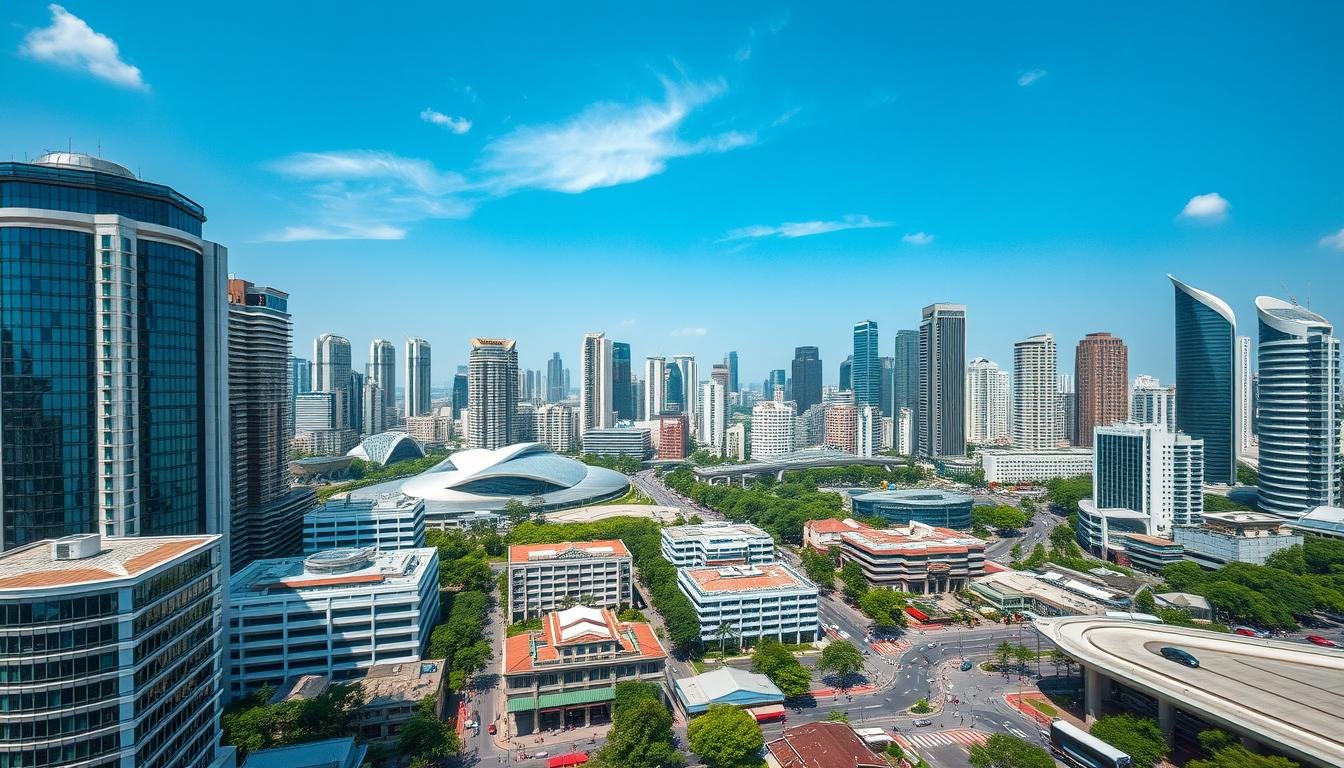
The GLS program has shaped Singapore’s Urban Planning, focusing on mixed-use developments. It has led to the creation of vibrant communities and iconic projects like the Marina Bay Financial Centre. As Singapore evolves, the GLS program will continue to play a vital role in its Real Estate market.
Historical Evolution of Land Sales in Singapore
Singapore’s property market has seen big changes, starting with the Housing and Development Board (HDB) in 1960. The HDB was created to solve a big housing shortage. Back then, the population grew from 950,000 to 1.7 million in just a few decades.
At first, only 9% of people lived in government flats. Most lived in slums or squatter settlements. The HDB quickly built over 31,000 flats, with modern amenities like piped water and sanitation.
This was a big step for Singapore’s property market. By 2023, 3.2 million people live in HDB flats, making up 78% of the population. The government’s land sales program has greatly influenced property prices and the market.

Many factors have shaped land sales in Singapore, like government policies and changes in the population. Knowing these factors helps us understand today’s property market. The government’s land sales program aims to make housing affordable and control property prices.
The GLS Mechanism and Implementation Process
The Government Land Sales (GLS) program is key to shaping Singapore’s property market. It releases land for bidding twice a year. This controls Land Supply to match Property Development demand. It helps the government manage land supply, impacting the property market.
The Government Policies behind GLS aim for a stable property market. By managing land supply, the government sets the pace of Property Development. This prevents too much speculation, keeping demand and supply in balance.

The GLS program uses a clear bidding process. Developers bid for land, and the government picks the highest bidder. This ensures quality projects from committed developers. It keeps prices stable and the market balanced.
In summary, the GLS mechanism and process are vital for Singapore’s property market. By managing Land Supply and Property Development, the government keeps the market stable and sustainable. The Government Policies behind GLS have made Singapore’s property market appealing to investors and developers.
Impact on Property Developers and Construction Companies
The Government Land Sales (GLS) program greatly affects property developers and construction companies in Singapore. It controls land supply, which shapes Market Trends. This changes property demand and prices, leading to competition among developers.
Construction Companies are key in bringing projects to life. The GLS program can change their business, as it affects Market Trends and land supply. Developers must navigate the GLS program to secure land and make profitable projects.
The construction industry has many skilled professionals, like architects and engineers. Renovations can save money in the long run by improving energy efficiency. Developers can find areas for new projects, which might increase property values.

Property development needs more planning than construction. Projects often start with homeowners or businesses, while developers or investors start them. Understanding the GLS program’s impact helps us see the Singapore property market’s complexities and how Market Trends shape the industry.
How GLS Influences Property Prices and Market Dynamics
The Government Land Sales (GLS) program shapes Singapore’s property market. It controls land supply, affecting prices and market dynamics. The balance between supply and demand is key to property prices.
In 2017, the average land price hit $1,000 per square foot for the first time. This was a 34.5% jump from $784 psf in 2016.
The GLS program regulates land supply, impacting market dynamics. It affects property prices by controlling the balance between supply and demand. For example, the average price per square foot (PSF) changes near en-bloc and GLS sites show this impact.
Positive changes in average PSF for developments near en-bloc sites were seen in 68.5% of cases. Negative changes were observed in 31.5% of cases.
The data reveals that most capital appreciation happens during market peaks. For instance, in 2013 and 2021. The average PSF change in the district during these peak years showed significant fluctuations.
The GLS program’s influence on property prices and market dynamics is complex. Various factors, like cooling measures and higher Additional Buyer’s Stamp Duty (ABSD), play a role. These factors can affect developer hesitation in aggressive bidding.
In conclusion, the GLS program has a big impact on property prices and market dynamics in Singapore. The balance between supply and demand is critical. Understanding this is key for developers, investors, and policymakers to make smart decisions about the property market.
Role of GLS in Urban Planning and Development
The Government Land Sales (GLS) program is key in Urban Planning and development. It ensures urban growth is balanced and sustainable. The program allocates land for different uses, helping in integrated Urban Planning and Infrastructure Development.
About 29 hectares of land near Newton MRT station have been zoned as reserve sites in the 2019 URA Master Plan. This is roughly the size of 40 football fields.
The URA’s Master Plan guides Singapore’s development for 10 to 15 years. It reviews every five years. This plan focuses on Land Use optimization, aligning urban development with long-term goals.
The GLS program supports this by providing a framework for Infrastructure Development. It includes new homes, offices, and community facilities.
The GLS program has helped develop projects like the 39-unit Cairnhill 16 and the 138-unit Klimt Cairnhill. These projects show the program’s role in Urban Planning and Infrastructure Development. They provide housing and amenities for the community.
By balancing Land Use and Infrastructure Development, the GLS program creates sustainable urban environments.
Investment Opportunities Through Government Land Sales
The Government Land Sales (GLS) program in Singapore is a goldmine for developers and investors. It includes ten Confirmed List sites and nine Reserve List sites for 1H2025. This means a chance to earn big with about 8,505 private residential units.
Recent data shows the 1H2025 GLS Programme will add 242,900 sqm of commercial space and 530 hotel rooms. The Confirmed List has nine private residential sites, including three EC sites. This will create about 5,030 private residential units. It’s a great chance for investors to make money from Government Land Sales.
The GLS program aims to meet Singapore’s housing needs. It plans to add about 57,200 private housing units in the next few years. The former Keppel Golf Course site will add 9,000 homes, and Bukit Timah Turf City will offer 15,000 to 20,000 homes over 20 to 30 years. Investors can look forward to a steady flow of opportunities in Real Estate Investment.
Challenges and Limitations in the Current System
The current system of government land sales in Singapore has many challenges. The regulatory framework is complex, leading to delays and higher costs for developers. This affects the property market overall.
The system also lacks flexibility in responding to market changes. The government land sales program aims to provide a steady land supply. But, it’s slow to adjust to demand shifts. This mismatch can increase prices and reduce affordability.
To tackle these issues, the government should reform the regulatory framework and land sales program. Streamlining approvals and adding flexibility can help. These changes can make the system more efficient, benefiting the property market and economy.
Shaping Tomorrow: Future Prospects of Singapore’s Land Sales Program
The future of Singapore’s government land sales (GLS) program is set for big changes. Emerging trends like a focus on sustainability and new policy directions will shape it. These changes will impact the GLS program in the coming years.
Sustainability will be key, with green building rules and carbon pricing. These steps will push developers to build more eco-friendly. This will make Singapore’s city greener. The GLS program will also aim to meet Singapore’s sustainability goals better.
Tax changes for property deals might also happen. This could change how the GLS program works. New taxes could help keep homes affordable and stop too much speculation. This would help the government guide the property market more.