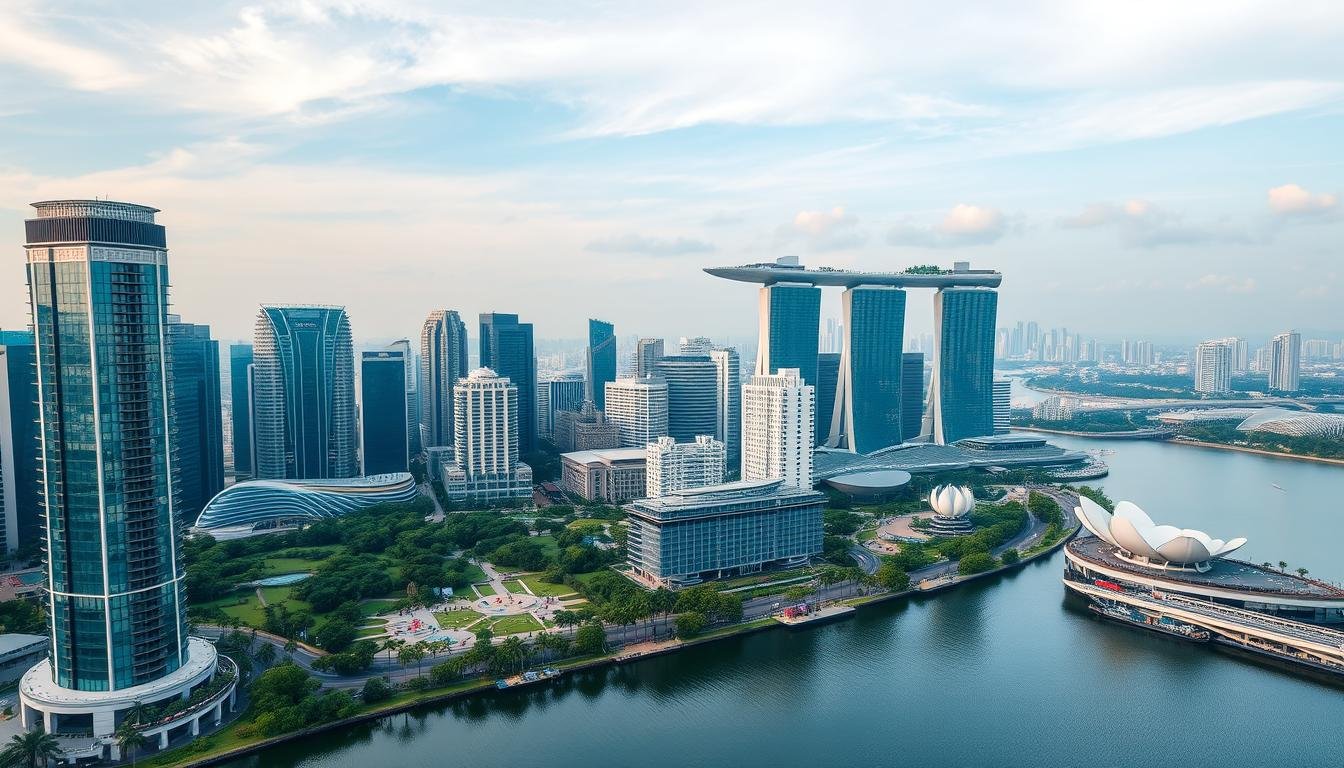
Singapore’s real estate market is changing fast. Knowing how to finance property is key for investors. In 2025, the market will be shaped by a strong economy, local demand, and foreign investment coming back. This guide will cover everything you need to know about property financing in Singapore.
It will look at market trends, financing choices, who can get loans, government help, and advice from experts. This will help you feel confident in the Singapore real estate world.
Key Takeaways:
- Singapore’s property market in 2025 is influenced by a stabilizing economy, strong domestic demand, and renewed foreign investment.
- The homeownership rate in Singapore reached 87.9% in 2020, with government policies and financial aids supporting affordability.
- This guide covers property financing options, eligibility criteria, government schemes, and expert insights for both local and foreign buyers.
- Sustainable and smart home features are expected to gain prominence in the Singapore real estate sector by 2025.
- Suburban areas outside the central region are experiencing increased demand due to affordability and better access to amenities.
Understanding the Singapore Property Market in 2025
The Singapore property market is expected to stay strong in 2025. This is due to high demand, especially in prime areas. With limited land, prices might go up.
Global money policies and inflation will also shape the market. Investors are looking for stability in Residential Properties in Singapore for their Property Investment in Singapore.
Government plans, like new MRT lines and urban projects, make homes more appealing. The growing population keeps demand high. But, cooling measures, rising rates, and economic worries will also affect the market.
Private property prices in Singapore rose by 6.8% in 2023. This is a slight drop from the 8.6% increase in 2022. Resale prices for public housing went up by 4.8% in 2023, less than the 10.4% growth in 2022.
PropNex, handling 63% of sales, made $624 million in 2023. It ranked No. 395 in Fortune’s Southeast Asia 500 list.
Singapore’s property market is highly sought after, with almost 90% homeownership. The government has cooling measures to keep the market stable. These measures help attract real buyers, not just speculators.
In 2025, the market is expected to grow by 4.5%. Demand in both residential and commercial sectors will drive this growth. Rental yields are forecasted to average 3.2%, and prices in prime areas could hit SGD 3,500 per square foot.
The vacancy rate is expected to drop to 5% in 2025. This shows the ongoing appeal of Residential Properties in Singapore and Property Investment in Singapore.
Types of Property Financing Options
Financing your Singapore property comes with several choices. Bank loans are a common pick, letting you borrow a big chunk of the property’s value. But, did you know you can also use your Central Provident Fund (CPF) Ordinary Account (OA)? It can help with down payments, housing loans, stamp duties, and legal fees. The amount you can take out depends on the property’s value and your CPF OA balance.
First-time HDB flat buyers can get help from government grants like the Enhanced CPF Housing Grant (EHG). These grants have seen increases, making them more reachable. If bank loans or government help aren’t options for you, private financing is available. But, it might have higher interest rates.
It’s important to know about the different financing options in Singapore. This includes down payments, stamp duties, and legal fees. Understanding these costs helps you make smart choices when buying a home here.
Eligibility Criteria for Financing
In Singapore, getting a loan for property depends on your citizenship and the property type. For HDB flats, you need to be a Singapore Citizen. The age range is 21 to 35, based on the scheme. There are also income limits for certain flats and grants.
For private properties, you must be at least 21 years old. Some exceptions apply for trust purchases. Foreign buyers face extra rules, especially for landed properties. Your credit score and income are key for loan approval.

The Total Debt Servicing Ratio (TDSR) is important. It limits monthly debt payments to 55% of your income. This includes car loans, personal loans, and credit card debt. Employed individuals have 100% of their base salary and 70% of bonuses counted. Self-employed individuals have 70% of their latest tax statement considered.
Understanding Singapore Property Eligibility and Foreign Property Buyers in Singapore is tough. But knowing these rules helps you make smart choices. It’s crucial for getting the right loan for your property goals.
Choosing the Right Loan Package
When you’re buying a property in Singapore, picking the right loan is key. You’ll need to think about fixed versus floating rates, loan length, and fees. Each choice has its own benefits and drawbacks.
Fixed-rate loans keep your interest rate the same for the whole loan term. But, they often have higher rates, about 3.9% more than floating rates. Floating-rate loans, linked to SORA, offer more flexibility but can change with the market.
Loan terms in Singapore range from 10 to 35 years. Longer terms mean smaller monthly payments but more interest paid over time. Banks offer different packages, including some tied to SORA for those who want rates to move with the market.
It’s important to look at your finances and how much risk you’re willing to take. Think about how interest rates might change and your long-term goals. This will help you choose a loan that fits your needs.
By looking at all your options, you can find a loan that balances stability and flexibility. This will help you on your property journey in Singapore.
The Role of Real Estate Agents in Financing
In the Singapore property market, real estate agents and consultants are key in financing. They offer insights, negotiate for you, and help with financing options.
Agents have ties with banks, making loan applications easier. They explain what you need, find the right loan, and negotiate better terms. This is great for new buyers or those not familiar with Singapore’s property financing.
Choose an agent based on their experience, neighborhood knowledge, and success. A good agent can get you a better price and help with property value. This is crucial for getting the right loan.
Agents charge 1% to 2% of the property price for sellers. Buyers usually don’t pay agent fees. Their expertise is worth considering for your property financing in Singapore.
Understanding Property Valuation
In Singapore’s real estate market, property valuation is key for financing and buying decisions. It looks at location, size, condition, and recent sales to find a property’s fair market value.
The valuation limit (VL) is the lower of the purchase price or market value. The withdrawal limit (WL) limits CPF funds to 120% of the VL. Location, future plans, and market conditions affect property value. Keeping the property in good shape and highlighting upgrades is important.
Real estate appraisal in Singapore uses several methods. The rental comparison method adjusts for market changes and property features. The income method divides Net Operating Income by the Capitalization Rate. The direct comparison method compares the property to similar sales, adjusting for differences.
Knowing how property valuation works in Singapore is vital for investors and buyers. By understanding the different methods and factors, you can make better decisions and increase your real estate’s value.
Importance of Financial Planning
Investing in Singapore property requires careful financial planning. Buyers need to look at their budget, including the purchase price and extra costs. This includes stamp duties, legal fees, and renovation expenses.
It’s wise to have a savings fund for 3-6 months of living costs. This helps cover unexpected expenses or changes in your financial situation.
Thinking about long-term goals is also key. This includes planning for retirement and future property investments. Buyers should make sure owning property fits into their overall financial plans. St James’s Place Wealth Management Asia found that 41% of Singaporeans lack a financial plan. This can cause financial stress and poor investment choices.

Singapore is the most expensive city for expats, from 2014 to 2019. Core inflation has averaged 1.52% over 20 years. Therefore, smart financial planning is essential.
By understanding their financial limits and goals, buyers can make better choices. These choices support their financial health and investment plans.
Government Schemes to Aid Homebuyers
Singapore has many government schemes to help homebuyers. The Enhanced CPF Housing Grant (EHG) gives up to SGD 120,000 to first-timer families and SGD 60,000 to singles. There are also Family Grant and Proximity Housing Grant for different buyers.
HDB, the public housing authority, offers various purchasing schemes. These depend on citizenship and marital status. Buyers can apply for help through the HDB website or HDB Hub. They need to check their eligibility, submit documents, and follow the application process for each grant or program.
With over a million HDB flats, the government aims to make homes more affordable and accessible. They set aside 95% of 4-room and larger flats for first-timers. They also launch Build-To-Order (BTO) flats with shorter waiting times and give priority to families with young children and the elderly.
Singapore’s housing grant and loan schemes help first-time homebuyers. By understanding these Singapore Housing Grants and HDB Schemes, buyers can make better choices. They can also get the financial help they need.
Common Mistakes to Avoid in Property Financing
Financing a property in Singapore requires careful decisions to avoid mistakes. Many buyers overlook the total costs, focusing only on the purchase price. They forget about stamp duties, legal fees, and renovation costs. This can lead to financial stress and unexpected expenses.
Ignoring market trends is another common error. Buyers who don’t keep up with the latest market changes might buy at the wrong time. They might also have unrealistic price expectations. Doing thorough research and seeking professional advice can help you make better choices.
Not doing enough research is a big mistake in property financing. Buyers who don’t check for upcoming developments or zoning changes might face surprises later. It’s important to do your homework to make smart decisions and avoid investment pitfalls.
To avoid these mistakes and have a successful property financing journey, plan carefully. Consider all costs, stay updated on market trends, and do your research. This way, you can make informed choices and get the most out of your property investment.
Future Outlook for Singapore Property Financing
The future of property financing in Singapore looks complex. Interest rates might go up, making mortgages harder to get. But, the government could introduce new rules to keep prices stable and homes affordable.
Buyers should be ready for changes. They need to stay flexible financially and keep up with market trends. Looking for properties that will increase in value is also wise.
There are new trends in the market. People want tech-smart, green homes and bigger suburban houses. Outdoor spaces and eco-friendly buildings are also in demand.
The property prices in Singapore might not drop as much as feared. The central area might see less demand, but executive condos could be a hit. They are about 25% cheaper than private homes and attract middle-income buyers.
The rental market is also changing. With prices going down, it’s a good time for both landlords and renters.