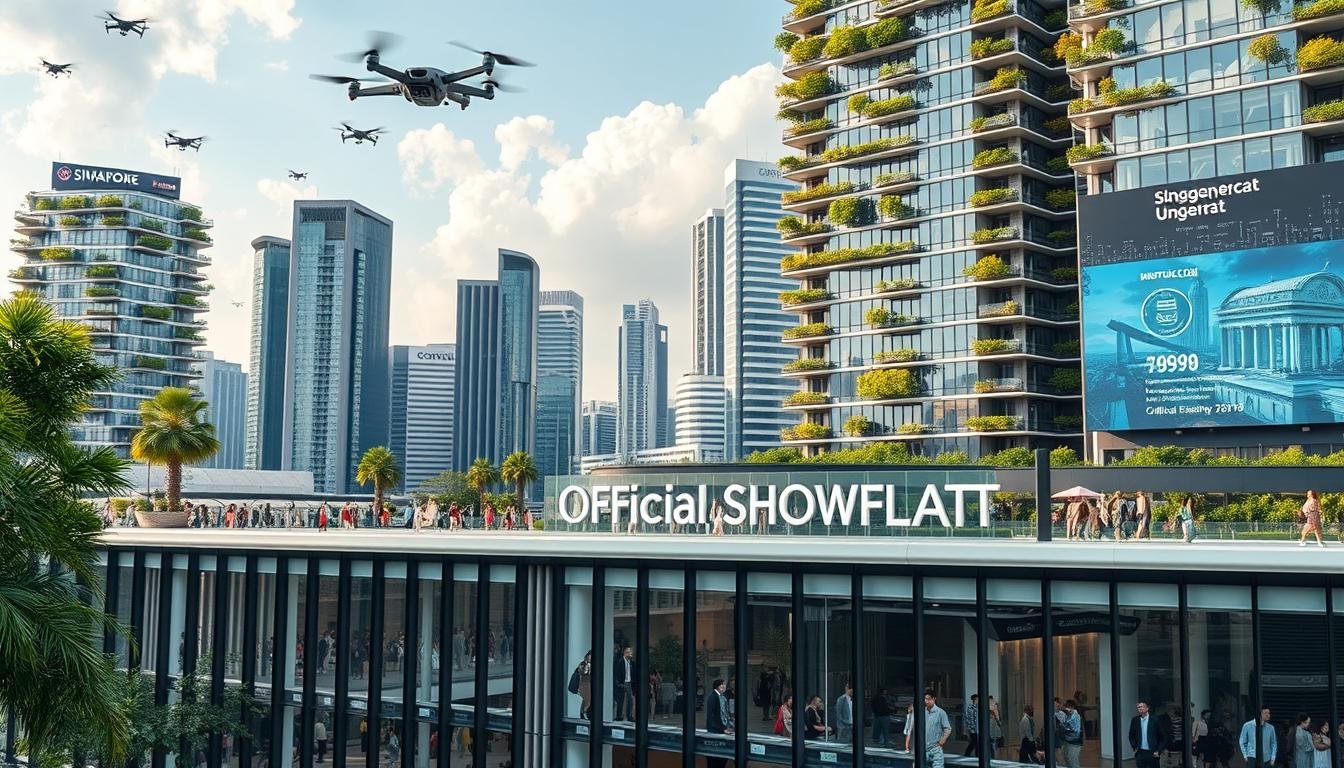
Singapore’s real estate market is changing fast with new tech. It’s set to grow by USD 50.74 billion from 2024 to 2028. Vendors are using social media and websites to connect with buyers.
Virtual tours and 3D visualizations are making property searches easier. They improve the buyer experience. This makes finding the right property more efficient.
The residential market is leading the way. This is thanks to Singapore’s strong economy and job market. The market offers different types of properties to meet various needs.
Key Takeaways
- Singapore’s real estate market is undergoing a technological transformation, with a projected CAGR of 4.45% from 2024 to 2028.
- Integrated marketing communication strategies, including social media and interactive websites, are being employed by vendors to reach their target audience.
- Virtual tours and 3D visualization tools have gained popularity in property marketing, enhancing the buyer experience.
- The residential subsegment is expected to lead the market, driven by Singapore’s strong economic performance and high employment rates.
- The market is segmented by area, mode of booking, and property type, catering to the diverse needs of property investors and homebuyers in Singapore.
Introduction to Tech in Singapore Property Market
The property market in Singapore is changing fast, thanks to PropTech. Now, we see smart homes, energy-saving designs, and more green spaces. The government is helping by supporting the market and encouraging mixed-use projects.
Even with land being scarce and prices going up, the industry keeps innovating. It’s all about making homes sustainable and creating lively communities.
The impact of these changes is clear in the Singapore Housing Market and Landed Property sectors. PropTech covers many areas, including homes, offices, and industrial spaces. CRE Tech, a part of PropTech, focuses on solving problems in commercial real estate.
PropTech makes property work easier by cutting down on paperwork and manual tasks. It makes property management more efficient, saving resources and costs. It also helps in collecting and analyzing data for better insights into property performance and market trends.
However, PropTech also brings its own set of challenges. There are concerns about data privacy and security, the need for standardization, and resistance from traditional players. It also requires a lot of time and money to implement.
Despite these hurdles, the Singapore property market keeps moving forward. The HDB resale market remains a favorite for affordable housing, showing the market’s resilience.
Smart Home Technology and Its Adoption
In Singapore, smart home tech is becoming more popular. People want homes that save energy, are easy to use, and have the latest tech. Features like lights that turn on by themselves, temperature control, and security systems are now common in new homes.
Smart home tech is especially seen in high-end condos. It helps increase the value of properties. Developers use these features to attract buyers who want modern, efficient homes.
Several factors are driving the use of smart home tech in Singapore. These include new tech, a focus on saving energy, and government support. The government offers help to make homes more energy-efficient and eco-friendly.
Despite its growth, the smart home market in Singapore faces challenges. There’s a risk of data breaches, system failures, and connectivity problems. As homes become more tech-savvy, it’s important for developers and homeowners to stay safe and enjoy the benefits.
The Rise of PropTech Startups in Singapore
Singapore is seeing a big increase in PropTech startups. These startups are changing the real estate industry in many ways. They bring new solutions for finding, managing, and selling properties.
They use advanced technologies like AI and blockchain. This makes things more efficient. The government’s support for digital innovation helps these startups grow.
PropTech companies are making a big impact on the rental market in Singapore. They offer platforms that make it easier for landlords and tenants. These platforms help property agents improve their services.
For example, Ohmyhome has helped with over 13,000 properties. It has saved customers $45 million in commissions.

The growth of PropTech startups in Singapore shows a lot of potential for change in real estate. Companies like Propseller and REALly are leading this change. With the real estate market in Singapore expected to hit $2.04 trillion by 2024, PropTech has a huge role to play.
Artificial Intelligence in Real Estate
Artificial Intelligence (AI) is changing Singapore’s real estate world. It’s now used for valuing, managing, and selling properties. Real estate companies are using AI to make things more efficient and to meet Singapore’s property laws.
AI helps predict property values by looking at lots of data. It gives accurate and personal price estimates. AI also makes buildings run better by using energy wisely and keeping them in good shape. AI chatbots help real estate agents give great service and answer questions.
AI also helps follow Singapore’s property rules by doing checks and analyzing contracts. It helps professionals make smart choices, leading to better investments. As AI grows, Singapore’s real estate will see even more AI use in the future.
Virtual and Augmented Reality in Property Viewing
The Singapore housing market is changing fast, thanks to new tech. Virtual and augmented reality (VR and AR) are leading this change. They’re making it easier for people to look at property listings in Singapore.
Studies show that properties with virtual tours get 87% more views than those without. In Singapore, virtual tours have boosted property inquiries by up to 49%. VR and AR are especially useful for properties that haven’t been built yet. They let buyers see what the property will look like before it’s even built.
These technologies are more important now than ever. They offer safe and easy ways to view properties, both for locals and international investors. In fact, properties with AR features have a 30% higher conversion rate than those without.
Developers using VR for new developments have seen a 40% jump in pre-construction sales. Buyers can dive into a virtual world and see their future homes. This is changing how people buy property, especially for those buying from abroad who can explore the Singapore market online.
Big Data and Analytics in Real Estate Decision Making
In Singapore’s fast-paced property market, big data and analytics are key for smart choices. Investors and developers use these tools to understand market trends and predict property values. They also find the best places to invest.
Analytics help real estate pros get to know what buyers want. This lets them create marketing plans that really work. Big datasets open up new ideas and solutions to tough problems.
Big data really makes a difference in commercial real estate. It helps manage portfolios better. It’s used for everything from saving energy to knowing when to fix things.
Even with big data’s benefits, many in Singapore’s real estate face challenges. They struggle to use these powerful tools well. But as they adopt PropTech, making smart decisions with data will become even more common.
Blockchain Technology in Property Transactions
Blockchain technology is changing the game in Singapore’s real estate. It brings better security, transparency, and speed to property deals. This fits with Singapore’s goal of becoming a smart nation.
Smart contracts on blockchain make property transfers smoother. They cut down on the need for middlemen. This could change how we own and transfer property.
Blockchain in Singapore’s property laws can fight fraud in real estate. For instance, Bitcoin’s value drops by 16% if not used in a week. If untouched for two weeks, it falls by 55%. Blockchain makes property deals safer and faster, keeping ownership records secure.
Blockchain also shortens the time it takes to record and transfer land titles. This brings more transparency and efficiency. The UK, Sweden, Ukraine, Dubai, and Georgia are testing blockchain for land titles. Singapore is likely to join them to improve its property laws and real estate.
Sustainability and Green Building Technologies
Sustainability and green building technologies are key in Singapore’s real estate. The government’s focus on eco-friendly buildings has made green tech common. This includes energy-saving systems, solar panels, and green roofs.
The Building and Construction Authority (BCA) Green Mark Scheme is leading the way. It makes buildings more environmentally friendly. This not only helps the planet but also increases property value. Green buildings are in demand, attracting those who care about the environment.
Singapore aims to have net-zero buildings by 2030. The Sustainable Development Code (SDC) focuses on biodiversity and green spaces. The SLE Building program pushes for ultra-low energy buildings, going beyond the Green Mark Platinum.
Construction in Singapore must reduce waste and promote recycling. The Green Mark Scheme’s higher scoring thresholds encourage more green tech use. This drives innovation and adoption.
The Singapore government is serious about sustainability. It offers bonuses for building owners who meet high environmental standards. With a focus on energy efficiency, sustainability will keep shaping the Singapore Housing Market.
Mobile Applications Transforming Real Estate
The property market in Singapore is changing fast, thanks to mobile apps. These apps are changing how people deal with the Singapore property rental and Property Listing Singapore markets.
One big feature of these apps is virtual property tours. Now, people can see properties online without leaving their homes. This saves a lot of time and is great for younger people who like using digital tools.
These apps also send out alerts for new listings. This helps users find their dream homes quickly. They can talk to agents, set up viewings, and even negotiate deals all from their phones.
For those who own properties, these apps make managing them easier. They handle everything from collecting rent to fixing things. Some apps even use AR to show how furniture fits in a room, making it easier to decide.
These apps are making the Singapore property market more accessible. They help buyers, renters, and owners deal with real estate easier. As technology gets better, these apps will have an even bigger impact on the industry.
The Influence of Social Media in Real Estate Marketing
Social media is becoming more important in real estate marketing in Singapore. Property agents and developers use Instagram, Facebook, and LinkedIn to show off their listings. They aim to attract potential buyers.
Virtual property tours and live viewings are now popular, especially during the pandemic. This shows how social media helps in reaching out to people.
Influencer marketing is also growing in the Singapore property sector. Real estate influencers share insights and reviews with their followers. This helps Singapore Property Agents connect with their audience more effectively.
Social media analytics help property professionals in Singapore understand market trends. They can use this data to target their marketing better. This way, they can find the best leads and tailor their messages to what buyers want.
The tech-savvy people of Singapore are making social media even more influential in real estate. By using social media wisely, Singapore Property Agents and developers can stay ahead. They can gain an edge in the fast-changing property market.
Conclusion: The Future of Singapore Property and Technology
The future of Singapore Property is closely tied to new technologies. AI, blockchain, big data, and green tech will keep changing the game. Startups in PropTech will lead the way, making things more efficient and innovative.
The government’s Smart Nation plan will push for more tech use in Real Estate Singapore. But, we must tackle issues like data privacy and the digital gap. Despite these, the real estate sector in Singapore is set to grow, thanks to technology.
AI, virtual reality, blockchain, and IoT will make buying homes easier and more sustainable. Online and social media will also become more important for marketing and connecting buyers and sellers. With a mix of growth and hope, the Real Estate Singapore sector is ready to embrace technology and offer a better, greener future.